
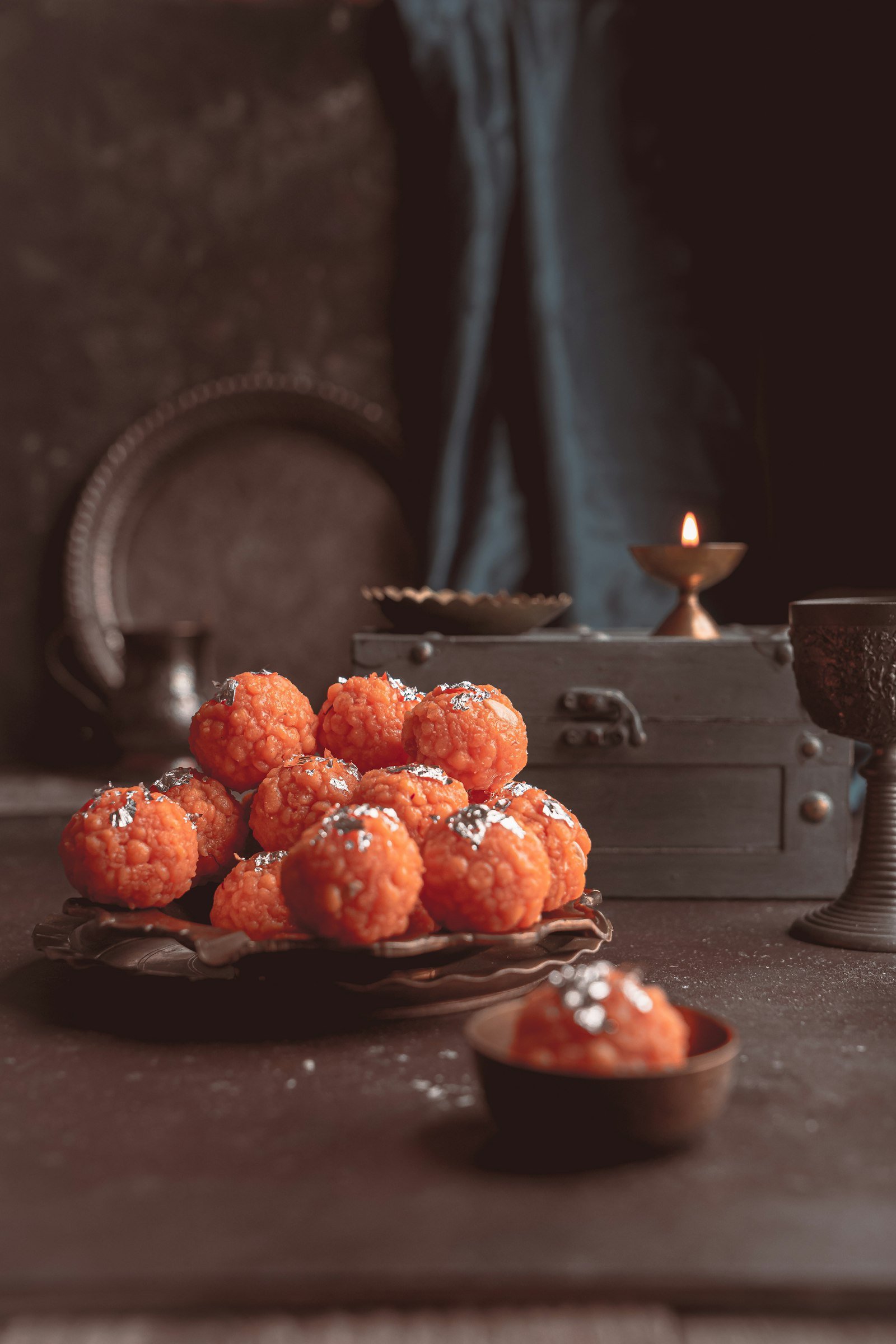
Is there any week in the Indian kitchen busier than Diwali week? There are sweets to make, faral to fry, guests to feed, a puja thali to prepare, and somewhere in between, regular meals for the family. Most of us end up cooking late into the night on Choti Diwali and eating cold puris by the time the diyas are lit.
It doesn’t have to be that way. This Diwali week meal plan gives you a festive menu for each of the five days, from Dhanteras to Bhai Dooj, a make-ahead schedule that spreads the sweets and snacks over the ten days before, a storage chart that tells you how long each sweet keeps, and a guest feast menu with rough quantities. The trick is simple: make the long-keeping things early, keep everyday meals light, and save your energy for the one big meal.
The short answer: how to plan your Diwali week menu
Make dry snacks and long-keeping sweets 7 to 10 days ahead, fresh sweets 1 to 3 days ahead, and prep gravies, doughs and pastes the day before. Keep everyday meals simple so the main Diwali dinner gets your full attention. A simple five-day menu looks like this:
- Dhanteras: light home meals and the first batch of fresh sweets.
- Choti Diwali: a faral breakfast of chakli, chivda, karanji and ladoo, and an easy dinner.
- Lakshmi Puja (main Diwali): a kheer and mithai bhog for the puja, then the big festive dinner.
- Govardhan Puja: annakut, a mixed vegetable sabzi of many vegetables, with kadhi, puri and rice.
- Bhai Dooj: a favourite-dishes lunch, followed by a light reset dinner.
When is Diwali in 2026?
In 2026, Diwali (Lakshmi Puja) falls on Sunday, 8 November. The five-day festival runs from Dhanteras a couple of days earlier to Bhai Dooj a few days later. Exact dates for Dhanteras, Choti Diwali, Govardhan Puja and Bhai Dooj can shift by a day depending on the tithi and on your regional panchang, so check your family’s calendar and slide this plan to match.
That means the make-ahead window starts around the last days of October. Start the dry snacks on the weekend of 31 October and 1 November and you’ll be relaxed when guests arrive.
How this Diwali meal plan works
- Sweets and snacks are spread out. Instead of frying everything on one exhausting night, you make two or three items per evening over the week before.
- Long-keeping first, fresh last. Chakli, chivda and besan ladoo keep well for a couple of weeks, so they go first. Gulab jamun, shrikhand and anything with fresh khoya or coconut are made closest to the day.
- Light days around heavy days. Rich food on Lakshmi Puja and Govardhan Puja is balanced by simple dal-rice, khichdi and chaas on the days around them.
- One feast, done properly. The main Diwali dinner is planned for 8 to 10 people, with dishes that can be made partly in advance.
Your Diwali make-ahead schedule
Here’s the countdown. Treat the days as a guide; if you only have two free evenings, do the items with the longest shelf life first.
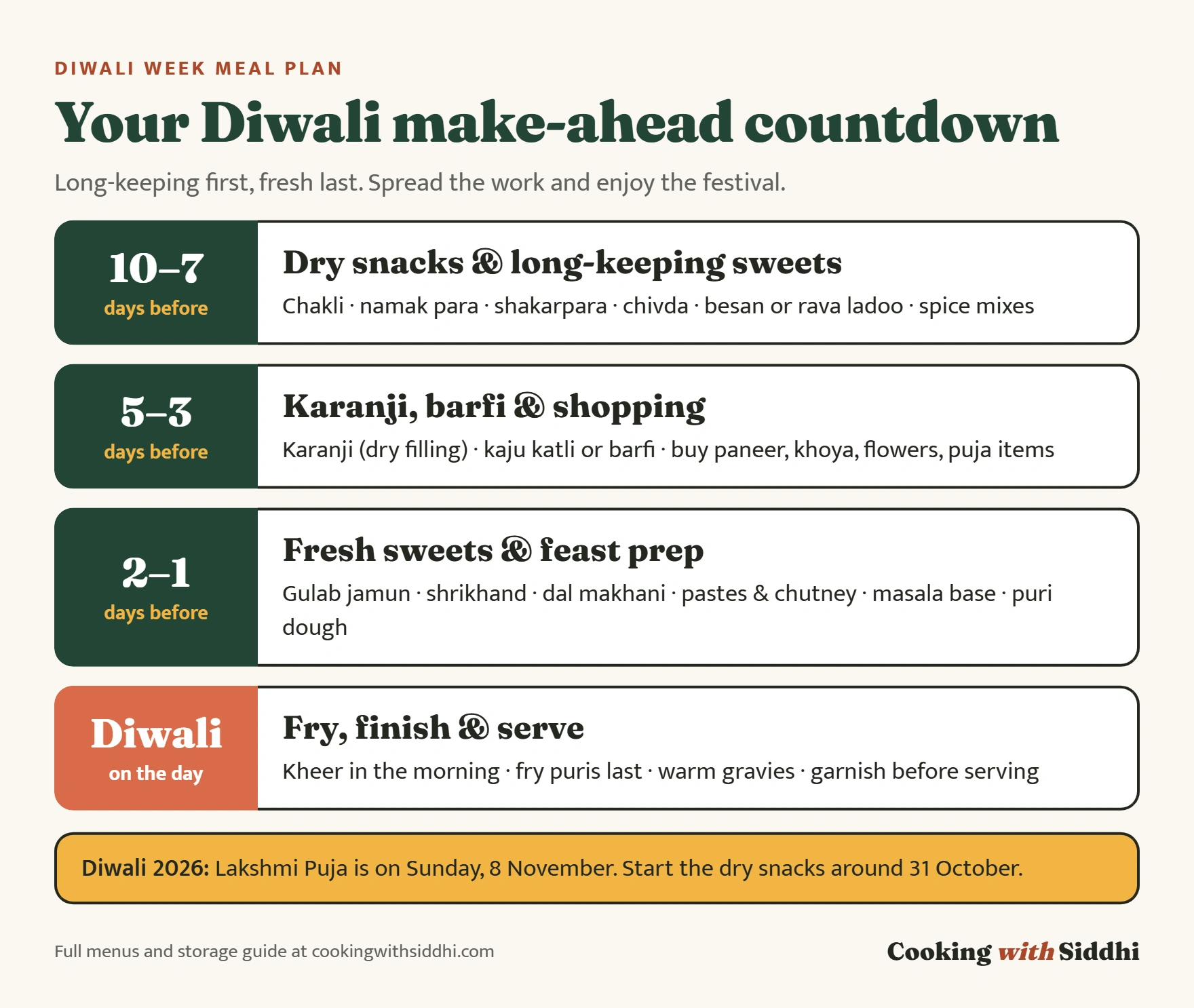
10 to 7 days before: dry snacks and long-keeping sweets
- Chakli, namak para, shakarpara and poha or cornflakes chivda.
- Besan ladoo or rava ladoo, which keep well in an airtight tin.
- Roast and grind any spice mixes you’ll need, such as garam masala or chaat masala.
- Deep clean the fridge and freezer to make room for festive cooking.
5 to 3 days before: karanji, barfi and shopping
- Karanji (gujiya) with a dry coconut or rava filling.
- Kaju katli or a simple milk-powder barfi.
- Buy fresh produce, paneer, khoya, flowers and puja items. Order sweets from a halwai if you’re buying any.
2 to 1 days before: fresh sweets and feast prep
- Gulab jamun and shrikhand, both of which keep a few days in the fridge.
- Soak and cook dal makhani the night before; it tastes better the next day.
- Grind ginger-garlic paste and green chutney, cook a big onion-tomato masala base, and knead dough for puris.
- Chop salad vegetables that won’t wilt, like carrots and cabbage, and store them in boxes.
On the day: fry, finish and serve
- Make kheer in the morning so it can chill.
- Fry puris and finish tadkas close to serving time.
- Warm gravies gently and garnish just before guests sit down.
The Diwali week menu, day by day
Day 1, Dhanteras: light meals and the first fresh sweets
- Breakfast: poha or upma with masala chai.
- Lunch: simple dal, a seasonal sabzi, roti and rice. Keep it easy; your evening is for sweets.
- Evening: make karanji or barfi if you haven’t yet. In many Maharashtrian homes, coriander seeds with jaggery (dhane-gul) are offered on this day.
- Dinner: vegetable pulao with boondi raita and papad.
Day 2, Choti Diwali (Naraka Chaturdashi): a faral morning
- Breakfast: a faral plate of chakli, chivda, karanji, shakarpara and ladoo with hot chai or coffee. In South India this is the main Deepavali morning, often with idli, vada and a sweet like kesari.
- Lunch: chole with jeera rice and onion salad; make the chole in a big batch and save some for tomorrow’s guests if you like.
- Dinner: moong dal khichdi with kadhi, or soup and toast. Light on purpose.
- Tonight: soak and cook dal makhani, set shrikhand and finish your feast prep list.
Day 3, Lakshmi Puja (main Diwali): bhog and the big dinner
- Breakfast: leftover faral, fruit and chai. You’ll eat well tonight.
- Lunch: curd rice or dal-rice with a dry sabzi.
- Puja bhog: rice kheer or seviyan kheer, a plate of mithai, puffed rice with batasha, and fresh fruit. Traditions vary, so follow your family’s way.
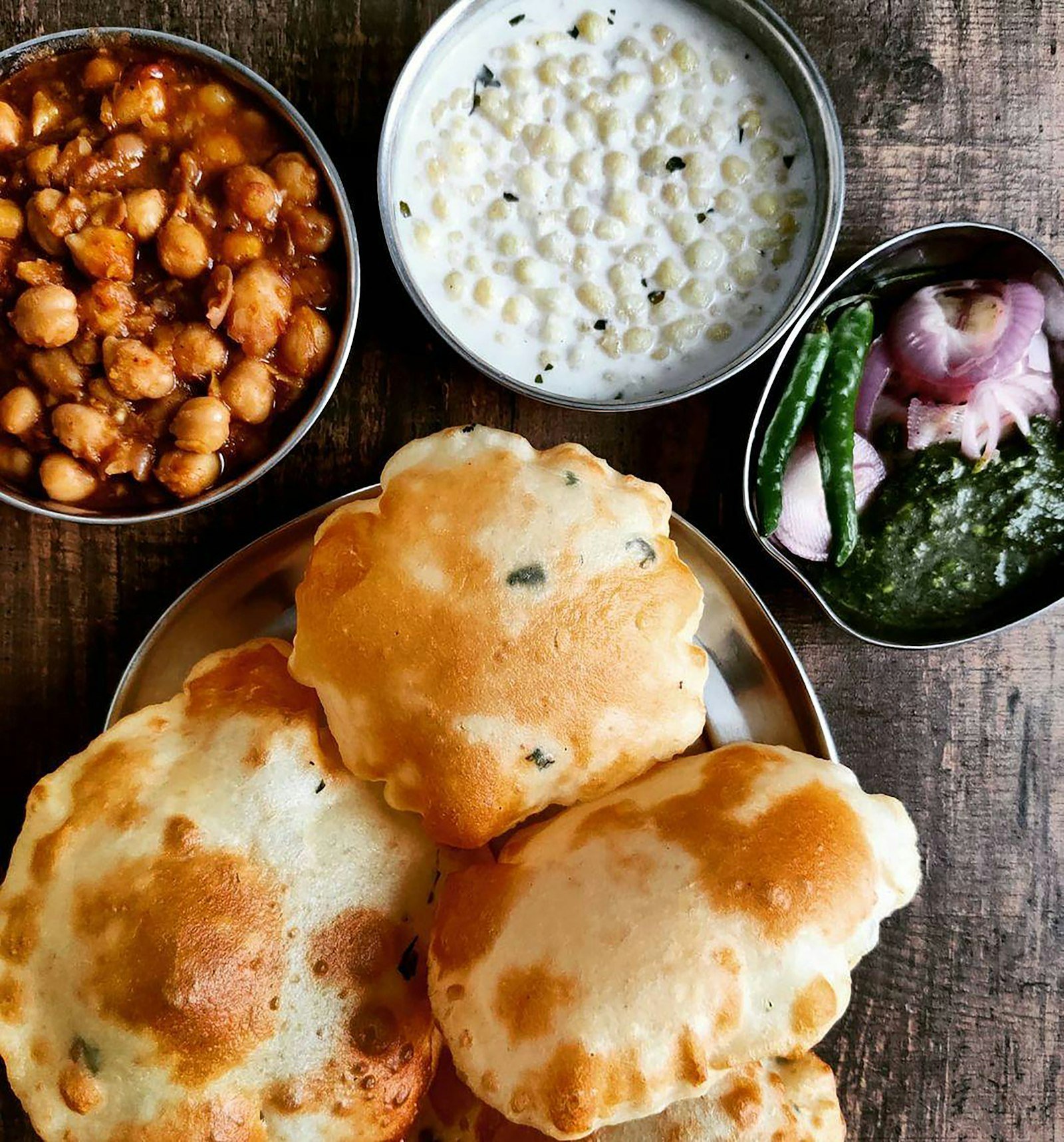
- Festive dinner: paneer butter masala or shahi paneer, dum aloo, dal makhani, jeera rice or matar pulao, puri, boondi raita, kachumber and papad, with gulab jamun and kaju katli to finish.
Day 4, Govardhan Puja and annakut
- Breakfast: methi thepla or paratha with curd.
- Lunch: annakut ki sabzi, a mixed sabzi made with many seasonal vegetables cooked together, served with kadhi, puri and rice. In Gujarati homes, this is also New Year (Bestu Varas), so keep sweets and snacks ready for visitors.
- Dinner: leftovers from the feast, reheated gently. Nobody needs to cook twice today.
Day 5, Bhai Dooj: a favourite-dishes lunch
- Breakfast: aloo paratha or besan chilla.
- Lunch: cook your brother’s or sister’s favourite dishes. A popular combination: malai kofta, missi roti or naan, jeera rice and gajar ka halwa.
- Dinner: a reset meal of khichdi, chaas and a big salad.
The day after: use up the leftovers
Crumble leftover ladoo over kheer or vanilla ice cream, toast stale puris into a crispy chaat base, turn leftover sabzi into paratha stuffing, and add extra chivda to a bowl of plain poha. Share extra sweets with neighbours, house help and the building staff before they go stale.
Regional Diwali specialities to add to your menu
Want your faral plate to taste like home? Every region has its own Diwali favourites. Pick one or two from your family’s tradition and one from somewhere new.
Gujarat
Mathiya and chorafali (crisp, spiced papad-like snacks), ghughra (the Gujarati karanji) and mohanthal, a rich besan fudge. Gujarati New Year, which falls just after Diwali, brings a steady stream of visitors, so make these in larger batches.
Maharashtra
The classic faral: chakli, poha chivda, karanji, shankarpali, anarse and besan ladoo. Anarse take a few days of rice soaking and drying, so start them early or leave them for a calmer year.
Punjab and North India
Mathri, namak para, kaju katli, besan ladoo and soan papdi, with rasmalai or gajar ka halwa for the main meal. Dal makhani and paneer dishes headline most festive dinners.
South India
Murukku, ribbon pakoda, mysore pak, adhirasam and kesari in Tamil Nadu, and obbattu (holige) in many Karnataka homes. Deepavali here is often celebrated on Naraka Chaturdashi morning with an oil bath, new clothes and sweets before sunrise.
Bengal
Diwali coincides with Kali Puja. Sandesh, rasgulla and narkel naru (coconut ladoo) are popular, and on Bhoot Chaturdashi, the day before, many families eat choddo shaak, a dish of fourteen leafy greens.
How long do Diwali sweets and snacks last?
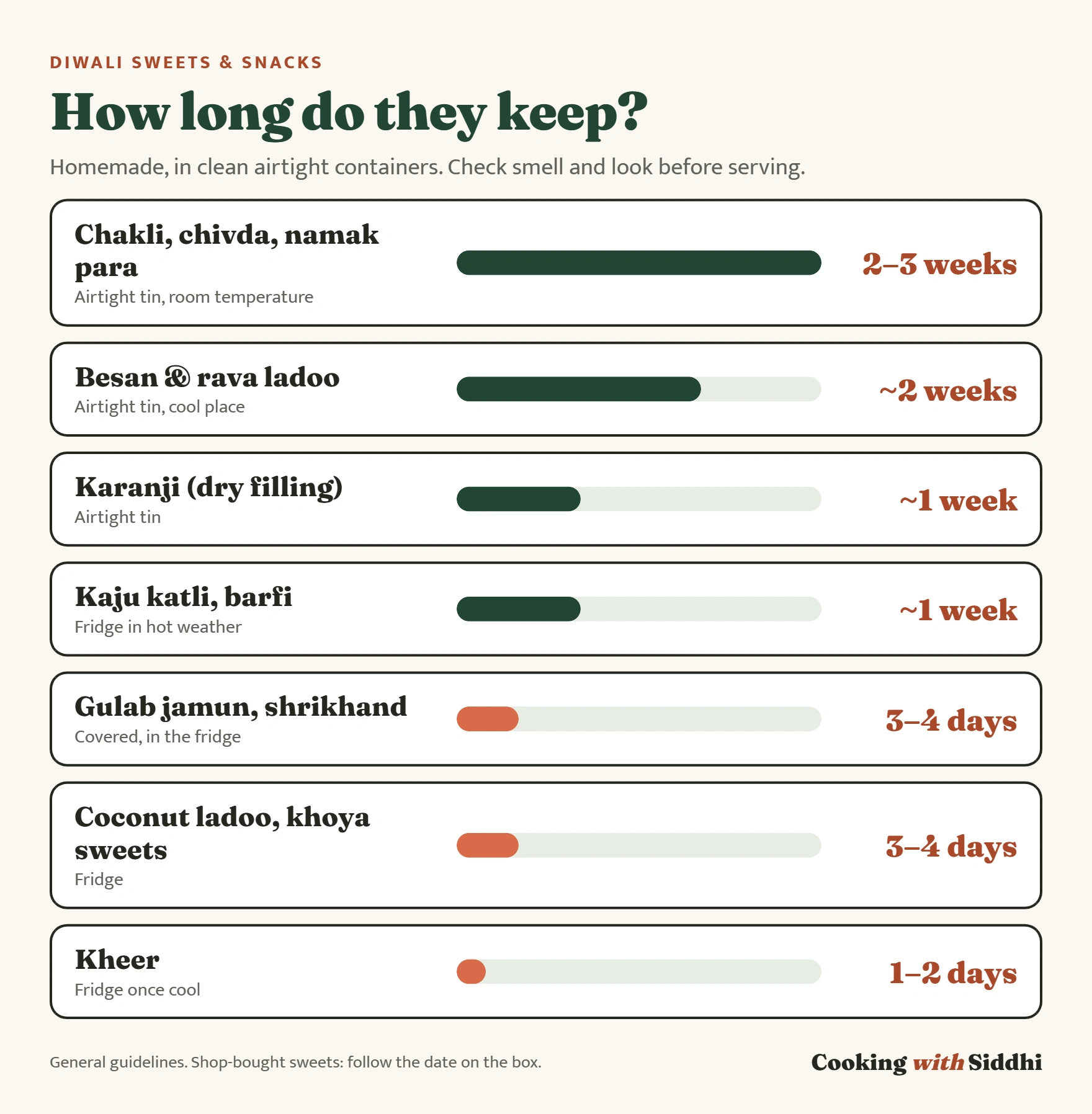
Storage times depend on the recipe, how much moisture it has, and how warm your kitchen is. These are general guidelines for homemade sweets stored in clean, airtight containers. When in doubt, smell, look and taste before serving, and throw out anything that smells sour or shows mould.
| Sweet or snack | Make ahead | Store | Usually keeps |
|---|---|---|---|
| Chakli, namak para, shakarpara, chivda | 7 to 10 days | Airtight tin, room temperature | 2 to 3 weeks |
| Besan ladoo, rava ladoo (without fresh coconut) | 7 to 10 days | Airtight tin, cool place | About 2 weeks |
| Karanji / gujiya (dry filling) | 4 to 5 days | Airtight tin | About 1 week |
| Kaju katli, milk-powder barfi | 3 to 4 days | Airtight box, fridge in hot weather | About 1 week |
| Gulab jamun in syrup | 1 to 2 days | Covered, in the fridge | 3 to 4 days |
| Shrikhand | 1 to 2 days | Covered, in the fridge | 3 to 4 days |
| Coconut ladoo, khoya or mawa sweets | 1 to 2 days | Fridge | 3 to 4 days |
| Kheer | Same day | Fridge once cool | 1 to 2 days |
Diwali pantry checklist
Shop for the long-keeping items in one trip around ten days before, and leave fresh dairy and produce for the last few days.
- Flours and grains: besan, rava, maida or atta for karanji and puris, rice flour for chakli, thick poha for chivda, basmati rice.
- Sweet-making basics: sugar, powdered sugar, jaggery, ghee, milk powder, cardamom, saffron and rose water.
- Dry fruits and nuts: cashews, almonds, pistachios, raisins, peanuts and desiccated coconut.
- Snack spices: ajwain, sesame seeds, cumin, red chilli powder, hing, turmeric and chaat masala.
- Fresh, closer to the day: paneer, khoya or mawa, curd for shrikhand and raita, fresh coconut, vegetables for annakut, flowers and fruit for the puja.
- Kitchen essentials: airtight tins, butter paper, foil, extra frying oil and a few takeaway boxes for sharing sweets.
Planning the main Diwali dinner for guests
How much food do you actually need? For 8 to 10 adults, a menu of two gravies, one dal, one rice, puris, raita, salad and two sweets is plenty. These rough quantities help you shop without overbuying:
- Paneer: about 1 kg for one paneer dish.
- Potatoes: about 1.5 kg of baby potatoes for dum aloo.
- Dal makhani: about 400 g whole urad dal and 100 g rajma.
- Rice: about 1 kg uncooked basmati for jeera rice or pulao.
- Puris: about 1 kg atta, which makes roughly 40 to 50 small puris.
- Raita: about 1.5 kg curd.
- Sweets: plan 2 to 3 pieces per person, plus kheer or halwa.
Choose dishes that wait well. Dal makhani and dum aloo improve when made a few hours ahead, and rice can be kept warm in a covered dish. Puris are the only thing that truly needs last-minute frying, so ask someone to roll while you fry.
Lighter, safer festive cooking
- Use an air fryer for some snacks. Shakarpara, namak para and even reheated samosas crisp up well with very little oil. If you’re thinking of buying one before the festival, our guide to the best air fryers in India compares five options.
- Don’t keep reusing frying oil. Oil that has turned dark, thick or starts smoking early should be discarded, not topped up.
- Fry in small batches. Overcrowding drops the oil temperature, so food absorbs more oil and turns soggy.
- Balance the plate. Add salad, raita or a bowl of dal to rich meals, and keep plenty of water and chaas around.
- Keep sweets covered. Ants and humidity are the enemies of homemade mithai, so use well-sealed tins.
Common Diwali cooking mistakes
- Making everything on Choti Diwali night. It’s the most common mistake. Spread the work using the countdown above.
- Making fresh sweets too early. Khoya, coconut and curd-based sweets taste best within a few days, so save them for last.
- Too many new recipes. Festivals are not the time to test five new dishes. Pick one new item and keep the rest familiar.
- Forgetting everyday meals. Plan simple lunches and dinners, or you’ll end up eating sweets for dinner.
- Not tasting the tadka. A good tadka lifts every dal and sabzi on the table. If yours turns bitter, our guide on how to make the perfect tadka explains why.
Frequently asked questions
How many days before Diwali should I start making sweets?
Start dry snacks like chakli and chivda and long-keeping sweets like besan ladoo 7 to 10 days before Diwali. Make karanji and barfi 3 to 5 days ahead, and gulab jamun, shrikhand and khoya sweets 1 to 2 days before.
Which Diwali sweets can be made a week in advance?
Besan ladoo, rava ladoo without fresh coconut, and dry snacks such as chakli, namak para, shakarpara and chivda keep well for one to three weeks in airtight tins. Karanji with a dry filling and kaju katli last about a week.
What should I cook for Diwali dinner?
A classic North Indian Diwali dinner includes a paneer dish such as paneer butter masala, dum aloo, dal makhani, jeera rice or pulao, puri, raita, salad and two sweets like gulab jamun and kaju katli. Choose dishes that can be partly made ahead.
What is faral?
Faral is the Maharashtrian name for the platter of homemade Diwali snacks and sweets, usually including chakli, chivda, karanji, shankarpali and ladoo. It’s traditionally eaten on the morning of Naraka Chaturdashi after an early bath.
What is annakut?
Annakut means a mountain of food. On Govardhan Puja, many families cook a large mixed sabzi from many seasonal vegetables, along with kadhi, puri and rice, and offer it before sharing it as a meal.
How long does gulab jamun last in the fridge?
Homemade gulab jamun kept in syrup in a covered container usually stays good for 3 to 4 days in the fridge. Warm them slightly before serving for the best texture.
When is Diwali in 2026?
Diwali (Lakshmi Puja) falls on Sunday, 8 November 2026. Dates for Dhanteras, Choti Diwali, Govardhan Puja and Bhai Dooj may vary by a day depending on your regional calendar.
Make this Diwali easier
Save this page, screenshot the countdown, and start your first batch of snacks this weekend. After the festival, get back to easy everyday cooking with our 7-day Indian vegetarian meal plan and its one-trip grocery list. Happy Diwali from our kitchen to yours.