
You know that sound. A spoonful of ghee hits a hot pan, mustard seeds start popping like tiny firecrackers, curry leaves hiss, and suddenly the whole house smells like someone is cooking something wonderful. That’s tadka. It takes less than a minute, yet it decides whether your dal tastes like a dhaba favourite or just… boiled lentils.
So why does the same tadka taste brilliant one day and bitter the next? Almost always, it comes down to two things: the order in which the spices go in, and the heat. Get those right and you can make a perfect tadka every single time, for any dish. Let’s walk through it together.
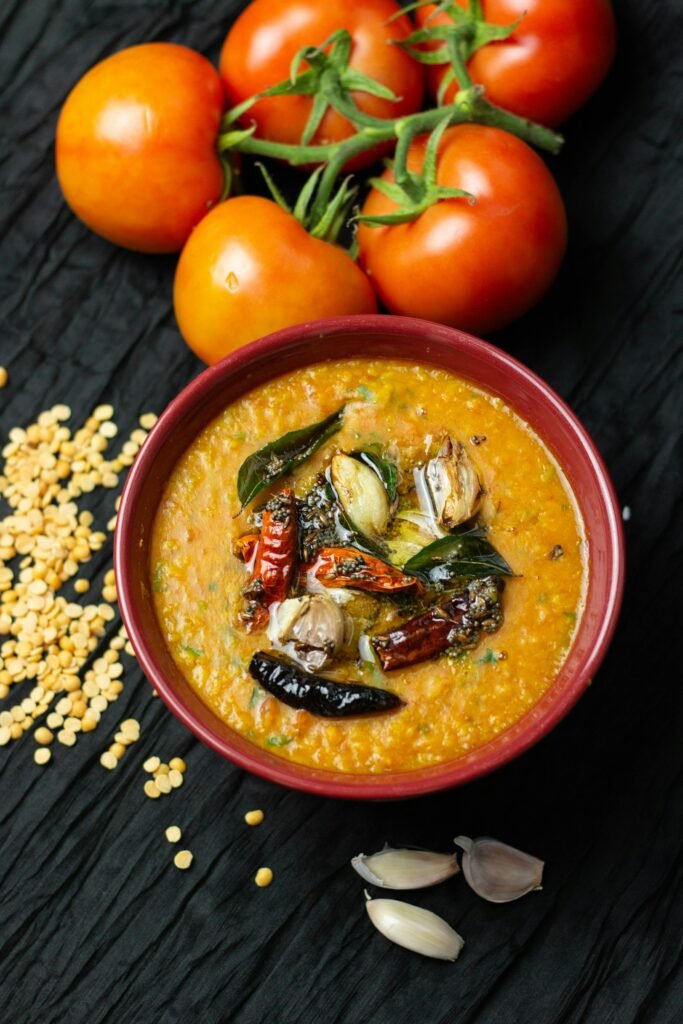
The short answer: how to make tadka
Tadka (also called tempering, chhonk or vaghar) is the technique of frying whole spices and aromatics in hot ghee or oil for a few seconds, then pouring the flavoured fat over a dish. To make it, heat the fat on medium until it shimmers, then add spices from slowest-cooking to fastest-burning:
- Whole seeds (mustard, cumin, methi) until they pop or darken slightly.
- Dals and whole spices (urad dal, chana dal, dried red chillies) until light golden.
- Aromatics (curry leaves, garlic, ginger, green chilli) until crisp or pale gold.
- Hing and chilli powder, with the pan off the heat, for about five seconds.
Pour it over the dish straight away. The whole process usually takes under a minute.
What exactly is tadka, and why does it matter so much?
Tadka is the finishing (or starting) touch that Indian kitchens have relied on for generations. Every region has its own name for it. It’s tadka or chhonk in much of North India, vaghar in Gujarat, phodni in Maharashtra, phoron in Bengal, thalimpu in Telugu kitchens, oggarane in Kannada homes and thalippu in Tamil Nadu. In English cookbooks you’ll usually see it called tempering.
Here’s why it works. Many of the aroma compounds in spices dissolve far better in fat than in water. When you simmer cumin in dal, a little flavour escapes into the liquid. When you sizzle that same cumin in hot ghee, the fat pulls out the aroma, toasts the seed and then carries all of it into every spoonful. That’s why a pinch of spices in a tadka can taste louder than a whole teaspoon stirred into the pot.
Tadka also adds texture. Think of the crunch of fried urad dal in coconut chutney, or crisp curry leaves floating on sambar. And it adds drama: that glossy, red-flecked pool of ghee on top of dal tadka is half the reason people order it.
Before you start: set yourself up for success
A tadka moves fast. Mustard seeds pop in seconds, and hing can scorch in less time than it takes to open a spice box. So the single best habit you can build is this: measure everything out before the pan goes on the flame. Line up your spices in the order they’ll go in. Chop the garlic. Wash the curry leaves and pat them dry. Keep the dish you’re tempering ready and close by.
Which pan should you use?
A small, heavy-based tadka pan (sometimes called a tadka ladle or vaghariyu) is ideal. The small surface keeps a little ghee deep enough for the seeds to fry evenly, and the long handle keeps your hands away from the spluttering. Cast iron and thick steel hold heat steadily. A thin pan heats in a flash and burns spices just as fast. No tadka pan? A small kadai or saucepan works; just keep the heat a notch lower. If you’re thinking of buying one, our kitchen product reviews explain what to look for in cookware.
How much tadka do you need?
For a pot of dal that serves four, 1 to 1½ tablespoons of ghee or oil is plenty, with about 1 teaspoon of whole seeds, 2 dried red chillies and a pinch of hing. Want a richer, dhaba-style finish? Go up to 2 tablespoons. That’s really a matter of taste.
Ghee or oil: which fat makes the best tadka?
Both work beautifully. The right choice depends on the dish and the region it comes from. Here’s a quick guide:
| Fat | Flavour | Best for |
|---|---|---|
| Ghee | Rich, nutty, slightly sweet | Dal tadka, khichdi, Gujarati dal, Rajasthani dals, kadhi |
| Mustard oil | Sharp and pungent | Bengali and Bihari dishes, many pickles and sabzis |
| Coconut oil | Mild and sweet | Kerala-style curries, thoran, many South Indian dishes |
| Sesame (gingelly) oil | Earthy | Tamil and Andhra dishes, puliyogare, kuzhambu |
| Groundnut oil | Neutral to lightly nutty | Everyday Gujarati and Maharashtrian cooking, poha |
| Neutral oils (sunflower, rice bran) | Very little flavour of their own | Anything, when you want the spices to speak |
One tip for mustard oil: many families heat it until it just starts to smoke, then let it cool for a few seconds before adding spices. This mellows its raw, sharp edge.
How to make tadka, step by step
Here’s the golden rule that makes everything else fall into place: whatever takes longest to cook goes in first, and whatever burns fastest goes in last. Save this cheat sheet. It’s the whole method in one picture.
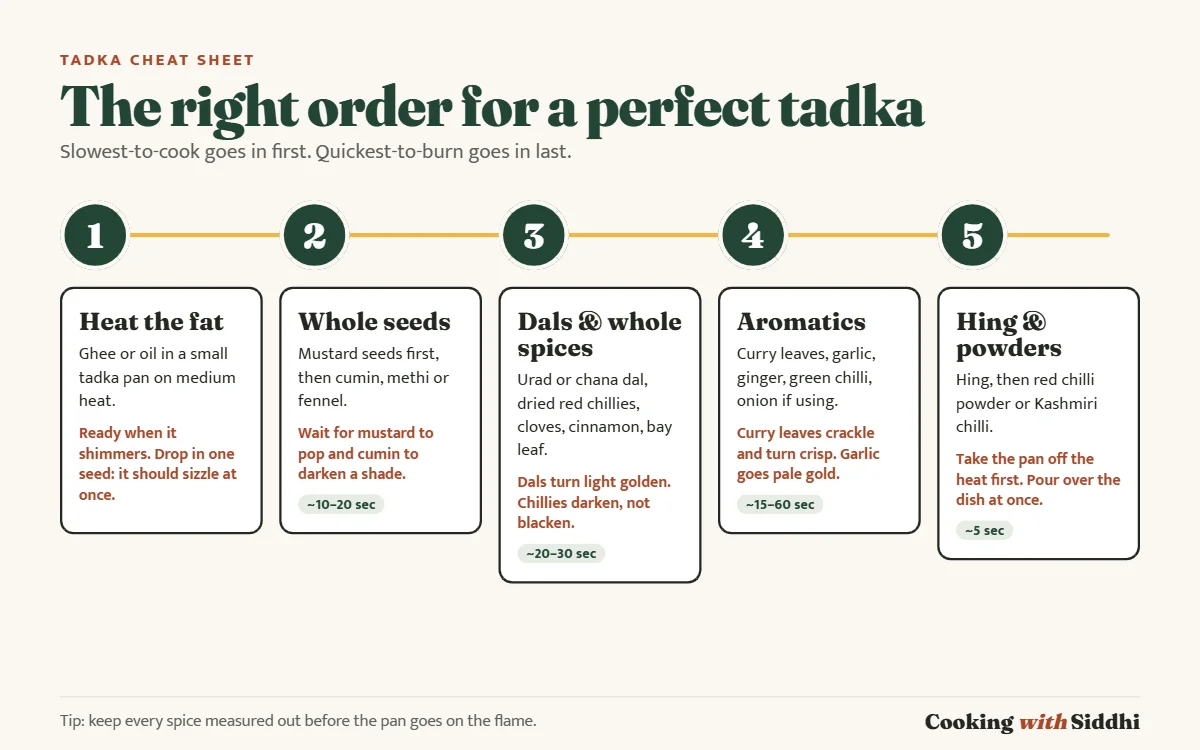
Step 1: Heat the fat to the right temperature
Warm the ghee or oil on medium heat. Too cold, and the spices soak up oil and turn soggy. Too hot, and they burn before they release any flavour. How do you know it’s ready? The surface shimmers slightly, and a single cumin or mustard seed dropped in sizzles immediately. If it just sits there, wait a few more seconds. If it blackens instantly, take the pan off the heat for a moment.
Step 2: Add the whole seeds
Mustard seeds go in first because they need the most heat to pop. Wait until most of them crackle. You’ll hear it, and a lid held loosely over the pan saves your stovetop. Then add cumin, fennel or methi seeds. Cumin is ready when it darkens by a shade and smells toasty. Methi (fenugreek) seeds should turn reddish-golden, never dark brown, or they’ll make the whole dish bitter.
Step 3: Add dals and whole spices
This is where South Indian tadkas get their famous crunch. Add urad dal and chana dal and stir until they turn light golden. Dried red chillies, cloves, a stick of cinnamon or a bay leaf go in now too. Chillies should darken and puff slightly, not turn black. Black chillies taste acrid, not smoky.
Step 4: Add the aromatics
Curry leaves, sliced garlic, grated ginger and slit green chillies come next. Curry leaves splutter violently because of the water in them, so stand back and add them all at once. They’re done when they turn crisp and translucent. Garlic needs a careful eye. Take it to pale gold, because it keeps cooking in the hot fat and goes from golden to burnt in seconds. If your recipe uses onion in the tadka, add it here and give it longer, until soft and golden.
Step 5: Hing and powders, off the heat
Ground spices burn almost instantly, so this is the step that ruins most tadkas. Turn off the flame or lift the pan away first. Add a pinch of hing (asafoetida), then red chilli powder or Kashmiri chilli powder if you’re using it. Kashmiri chilli gives that gorgeous red colour without much heat. Swirl for about five seconds and pour the tadka over your dish right away. Hear that final sizzle as it hits the dal? That’s exactly what you want.
Which spice goes first? A quick-reference table
Bookmark this one. It answers the question every home cook asks at some point: “When do I add this?”
| Ingredient | When it goes in | How you know it’s ready |
|---|---|---|
| Mustard seeds (rai) | First | Most seeds pop and crackle |
| Cumin seeds (jeera) | First or just after mustard | Darkens a shade, smells toasty |
| Fenugreek seeds (methi) | With the seeds, in small amounts | Reddish-golden; stop before brown |
| Fennel seeds (saunf) | With the seeds | Fragrant, slightly darker |
| Urad dal, chana dal | After the seeds | Light golden and crunchy |
| Dried red chillies | After the seeds | Darker and puffed, not black |
| Cloves, cinnamon, bay leaf | After the seeds | Fragrant within seconds |
| Curry leaves | Second to last | Crisp and translucent |
| Garlic, ginger, green chilli | Second to last | Pale gold; green chilli blisters |
| Hing (asafoetida) | Last | Fizzes and smells mellow within seconds |
| Red or Kashmiri chilli powder | Very last, off the heat | Fat turns red; pour immediately |
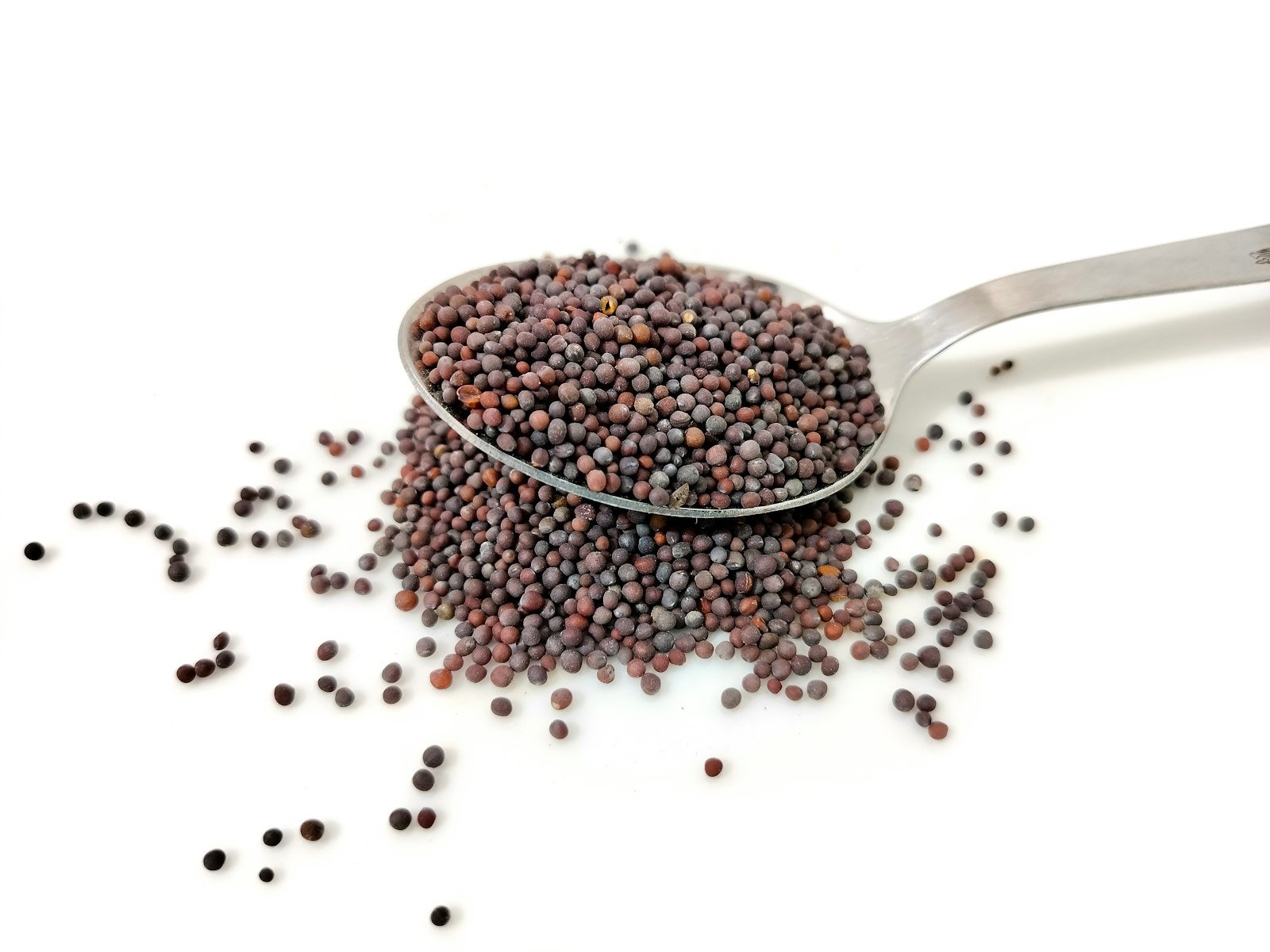
Tadka at the start, at the end, or both?
Here’s something many recipes never explain: there are actually three ways to use a tadka, and each gives a different result.
Tadka at the start (the base)
Spices are sizzled first, then vegetables, rice or flattened rice go straight into the same pan. Poha, upma, jeera rice and most dry sabzis are made this way. The flavour runs through the whole dish, softer and more rounded.
Tadka at the end (the pour-over)
The tadka is made separately and poured over a finished dish such as dal, sambar, kadhi, raita or chutney. The aroma stays bright and on the surface, which is why the first spoonful always smells incredible.
Double tadka (the dhaba secret)
Ever wondered why restaurant dal tastes deeper than yours? Many cooks temper twice. A first tadka of cumin, onion, tomato and spices cooks into the dal, and a second, smaller tadka of ghee, garlic and red chilli goes on top just before serving. Try it once and you’ll see why it’s so popular.
Regional tadkas of India: one technique, many kitchens
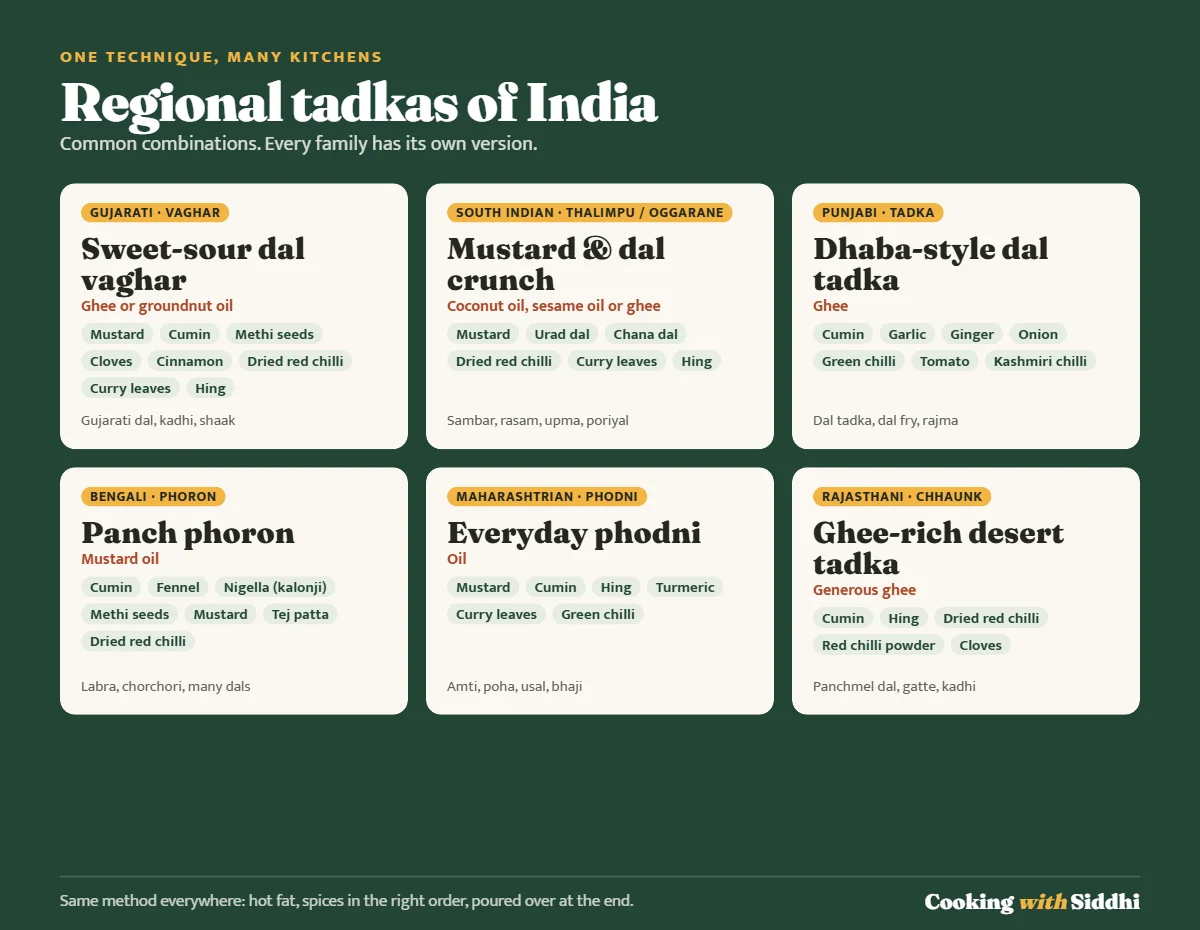
Travel from Gujarat to Bengal and the method stays the same, but the combinations change completely. Here are six classics to explore:
Gujarati vaghar
Gujarati dal and kadhi get a fragrant vaghar of ghee, mustard, cumin, a few methi seeds, cloves, a piece of cinnamon, dried red chilli, curry leaves and hing. The warm whole spices balance the gentle sweet-sour taste of the dish. Explore more in our Gujarati recipes.
South Indian thalimpu and oggarane
Mustard seeds, urad dal, chana dal, dried red chillies, curry leaves and hing, often in coconut or sesame oil. This is the crunchy, crackling tadka that finishes sambar, rasam, upma and poriyal. See our South Indian recipes.
Punjabi dal tadka
Generous ghee with cumin, garlic, ginger, onion, green chilli, tomato and Kashmiri chilli. It’s bold, rich and unapologetically indulgent, and it’s the style most people picture when they hear the word “tadka”. More in our Punjabi recipes.
Bengali phoron and panch phoron
Panch phoron is a five-seed blend of cumin, fennel, nigella (kalonji), fenugreek and mustard. It’s usually fried in mustard oil with a bay leaf (tej patta) and dried red chilli. It gives labra, chorchori and many dals their signature aroma. Browse our Bengali recipes.
Maharashtrian phodni
A quick everyday phodni of oil, mustard, cumin, hing, turmeric, curry leaves and green chilli sits behind amti, poha, usal and countless bhajis. Find more in our Maharashtrian recipes.
Rajasthani chhaunk
Rajasthani kitchens are known for generous ghee. A typical chhaunk for panchmel dal or gatte uses cumin, hing, dried red chillies, red chilli powder and sometimes cloves. It’s simple, fiery and deeply comforting. See our Rajasthani recipes.
7 tadka mistakes (and how to fix them)
Everyone makes these at some point. The good news? Every one of them has an easy fix.
1. The fat isn’t hot enough
Seeds sit there, soak up oil and never pop. Fix: always test with one seed first. Wait for an instant sizzle.
2. Everything goes in at once
Mustard needs time to pop while garlic burns in seconds, so throwing everything in together guarantees one of them is wrong. Fix: follow the order: seeds, dals and whole spices, aromatics, then powders.
3. Powders burn
Burnt chilli powder or hing turns bitter and can make you cough. Fix: take the pan off the heat before adding any ground spice, and pour within seconds.
4. Wet curry leaves cause a splatter storm
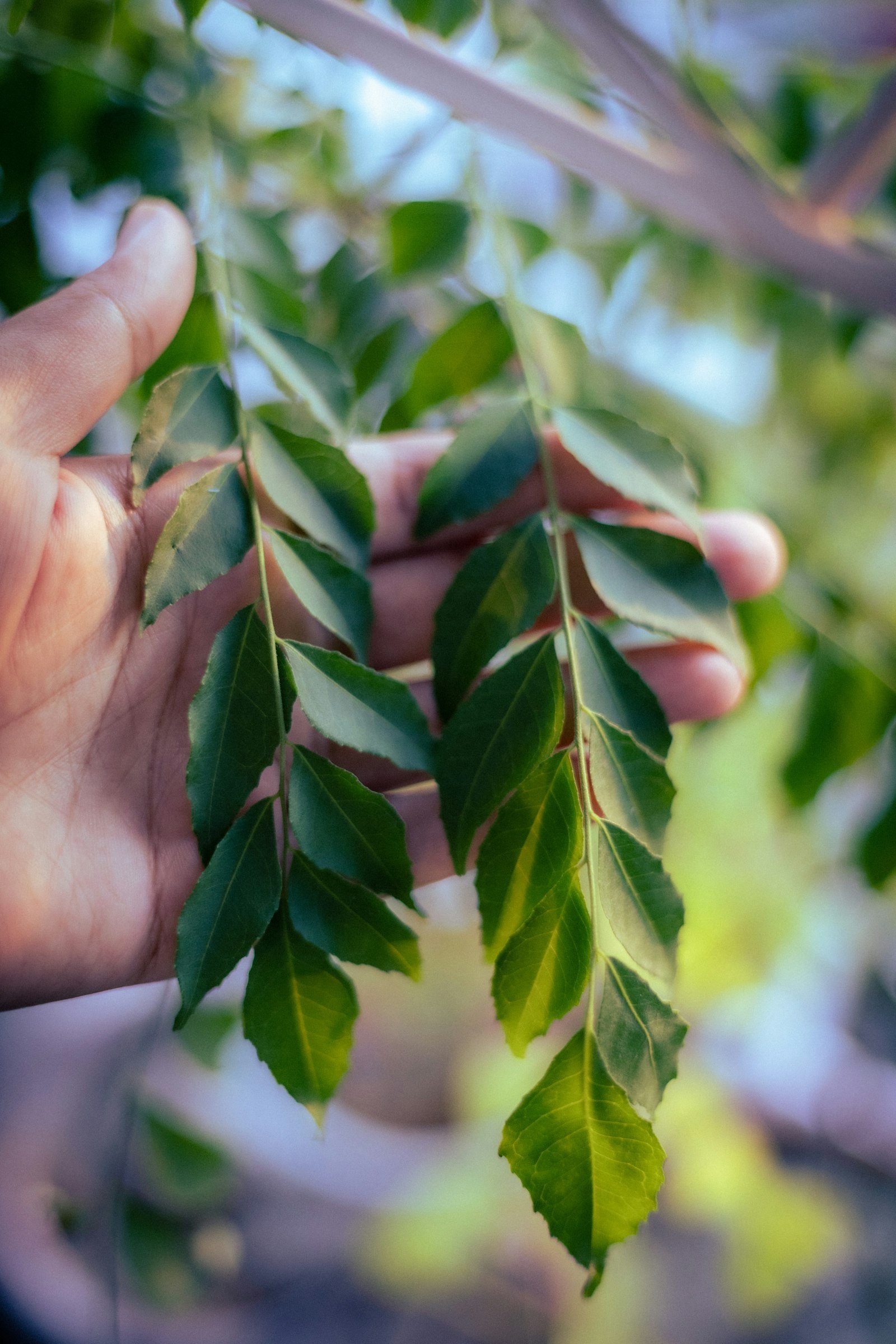
Water on curry leaves makes hot oil jump out of the pan. Fix: wash them ahead of time and pat them completely dry. Add them in one go and step back.
5. Methi seeds go too dark
A few over-browned fenugreek seeds can make a whole pot of kadhi or sambar bitter. Fix: use only a few, and stop when they turn reddish-golden.
6. Too much hing
Hing is powerful, and too much can taste medicinal. Fix: start with a small pinch. Remember that strengths vary, because most hing sold in India is compounded with flour.
7. The tadka sits around before serving
A pour-over tadka loses its magic within minutes, so a tadka made too early just tastes flat. Fix: make it last, right before you serve, and pour it on while it’s still sizzling.
Burnt it anyway? Here’s what to do
Don’t pour it in. A burnt tadka will spread bitterness through the whole dish, and no amount of salt or lemon will hide it. Wipe the pan, start again with fresh ghee, and lower the heat a little. It costs you two minutes and saves the meal.
Quick tadka formulas for everyday dishes
Need a starting point? These combinations work for a dish that serves about four. Adjust the chilli and ghee to your taste.
| Dish | Fat | Tadka, in order |
|---|---|---|
| Dal tadka (North Indian) | 1½ tbsp ghee | 1 tsp cumin → 4 cloves sliced garlic, 2 dried red chillies → pinch of hing → ½ tsp Kashmiri chilli, off the heat |
| Sambar or rasam | 1 tbsp oil or ghee | 1 tsp mustard → 2 dried red chillies → 10–12 curry leaves → pinch of hing |
| Gujarati dal or kadhi | 1 tbsp ghee | ½ tsp mustard, ½ tsp cumin, a few methi seeds → 2 cloves, small cinnamon stick, 2 dried red chillies → curry leaves → pinch of hing |
| Coconut chutney | 2 tsp oil | ½ tsp mustard → 1 tsp urad dal, 1 dried red chilli → 6–8 curry leaves |
| Poha (phodni) | 1½ tbsp oil | 1 tsp mustard → handful of peanuts → curry leaves, green chilli → onion → ½ tsp turmeric |
| Raita or curd rice | 1 tsp oil | ½ tsp mustard, ½ tsp cumin → 1 dried red chilli, a few curry leaves → pinch of hing |
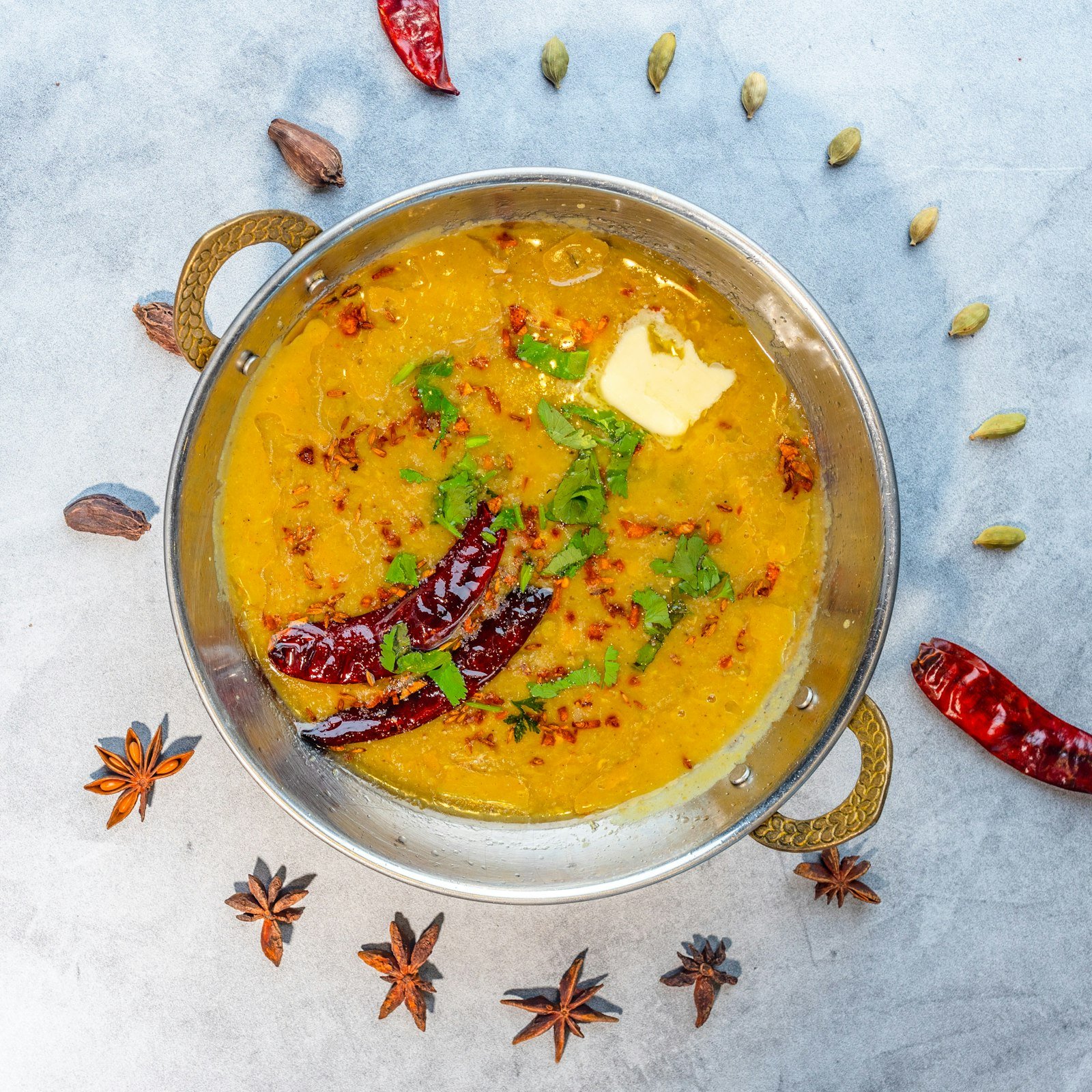
Looking for something to pour your new tadka over? Start with our dal and legume recipes, or try it on a quick weeknight meal.
Frequently asked questions about tadka
What is the difference between tadka and tempering?
There’s no difference. Tempering is simply the English name for tadka. Both describe frying spices in hot fat to release their flavour, then adding that fat to a dish.
Which spice goes first in a tadka?
Mustard seeds usually go in first because they need the most heat to pop. Cumin and other whole seeds follow, then dals and dried chillies, then curry leaves and garlic. Hing and chilli powder go in last, with the pan off the heat.
Is ghee or oil better for tadka?
Neither is better overall. Ghee gives a rich, nutty finish that suits dal, khichdi and kadhi. Mustard, coconut and sesame oils suit Bengali, Kerala and Tamil dishes. A neutral oil works when you want the spices to stand out.
Why does my tadka taste bitter?
Bitterness almost always means something burnt. The usual culprits are chilli powder, hing, garlic or methi seeds. Lower the heat, add powders off the flame, and stop methi seeds at reddish-golden.
How long does a tadka take?
Most tadkas take between 30 seconds and a minute once the fat is hot. A tadka with onion and tomato, like Punjabi dal tadka, takes a few minutes longer.
When should I add hing to a tadka?
Add hing near the end, after the seeds and aromatics, and only for a few seconds. It burns quickly. Many cooks lift the pan off the flame just before adding it.
Can I make tadka in advance?
A pour-over tadka tastes best made fresh, right before serving, because its aroma fades quickly. You can prep the spices and chop the garlic ahead of time so the tadka itself takes under a minute.
What is a double tadka?
A double tadka means tempering a dish twice: once at the start of cooking to build flavour into the base, and again just before serving for fresh aroma on top. It’s a common trick behind restaurant-style dal.
Your turn at the stove
Tadka isn’t about following a rigid recipe. It’s about listening to the pan: the pop of the mustard, the crackle of the curry leaves, the moment the garlic turns gold. Remember the one rule, slowest first, fastest last, powders off the heat, and you’ll be able to temper any dish from any corner of India with confidence.
Tonight, make a simple pot of dal and give it a proper ghee tadka. Then tell us in the comments which regional tadka is your family’s favourite. We’d love to hear how your kitchen does it.