
Kulfi and kheer get their creaminess from milk that has been cooked down slowly. Siddhi’s malai kulfi and rice kheer use no khoya at all: just full fat milk and time on the stove.
This guide collects the milk steps from her kheer and kulfi recipes, so you can see the habits they share and how far each one cooks the milk.
Every recipe linked in this guide is cooked in Siddhi’s own kitchen before it goes live.
The short answer
Heat a little water in a heavy pan, pour in full fat milk and bring it to a boil on a high flame. Then simmer on a medium flame, stirring and scraping the milk from the sides back in, until it is as thick as the recipe needs.
- For Malai Kulfi, cook it down until only a quarter of the milk is left.
- For Thandai Rice Kheer, simmer until the milk is almost half, then add the rice.
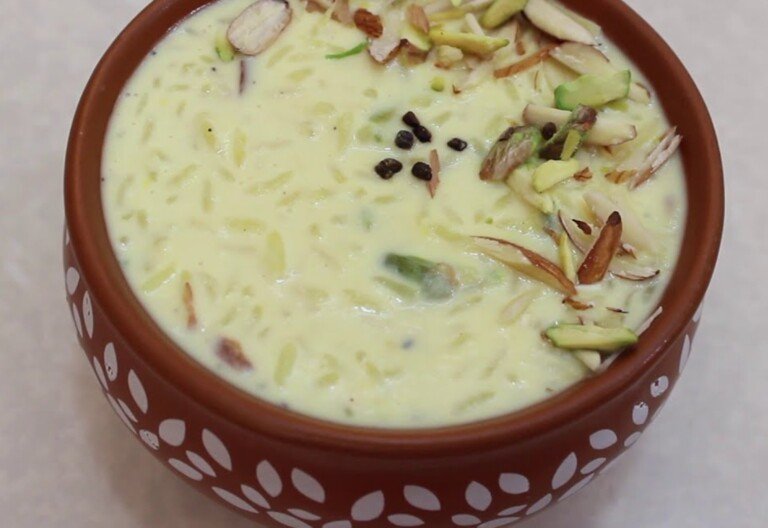
- For Rice Kheer, boil the milk well, then cook the rice in it on a low to medium flame.
The habits Siddhi’s milk recipes share
1. Water in the pan first
In her Malai Kulfi, Rice Kheer, Thandai Rice Kheer and Makhane ki Kheer, Siddhi heats a little water in the pan before the milk goes in. In the kulfi recipe she explains why: the water stops the milk sticking to the bottom.
2. A heavy pan
For thandai rice kheer she uses a thick bottomed pan, preferably aluminium. Her Coconut Kheer is made in a thick based kadhai.
3. High flame to boil, medium flame to reduce
In her kulfi, rice kheer and thandai rice kheer, the milk comes to a boil on a high or full flame. After that, she lowers it to a medium flame to simmer.
4. Scrape the sides back in
As the milk simmers, milk deposits form on the sides of the pan. Siddhi keeps scraping them off and mixing them back into the milk, and stirs often so nothing sticks to the bottom.
How far to cook the milk
| Recipe | Milk | How far it is cooked |
|---|---|---|
| Malai Kulfi | 2 litres full fat milk | Until only a quarter is left, then sugar, dry fruits, saffron and cardamom go in and it cooks until it sticks to the spatula |
| Thandai Rice Kheer | 2 litres full fat milk | Until almost half, then the soaked rice goes in |
| Rice Kheer | 2 litres full fat milk | Boiled well, then ½ cup rice cooks in it on a low to medium flame |
| Makhane ki Kheer | 2 litres full fat milk | Boiled for 20 minutes, then simmered 8 to 10 minutes with the makhana |
| Poha Kheer | 1 litre full fat milk | On a low flame until thicker, about 10 minutes, then the poha goes in with 40 g milk powder |
| Seviyan Kheer | 1 litre full fat milk | Boiled with 20 g milk powder, then 8 to 10 minutes on a low to medium flame with the vermicelli |
Cooling the milk for kulfi
Once the kulfi mixture is thick, Siddhi switches off the gas and cools it at room temperature, stirring occasionally so a cream layer does not form. She then whisks it well so the mixture is fluid yet thick and grainy, fills the cups and freezes it overnight. The full method is in her Malai Kulfi recipe.
FAQs
How do you stop milk sticking to the bottom of the pan?
Siddhi heats a little water in the pan before pouring in the milk, then stirs frequently and scrapes the sides while it simmers. For thandai rice kheer she uses a thick bottomed pan, preferably aluminium.
How much should milk be reduced for kulfi?
For malai kulfi, Siddhi cooks 2 litres of full fat milk until only a quarter is left. She says cooking the milk thoroughly is what makes the kulfi creamy and thick.
Can I make kheer without reducing the milk for a long time?
For poha kheer and seviyan kheer, Siddhi adds milk powder to the milk. Poha kheer cooks the milk on a low flame for about 10 minutes before the poha and milk powder go in, and seviyan kheer simmers for 8 to 10 minutes once the vermicelli is added.
How do you stop a cream layer forming as kulfi cools?
Siddhi cools her kulfi mixture at room temperature and stirs it occasionally so a cream layer does not form, then whisks it well before filling the cups.