
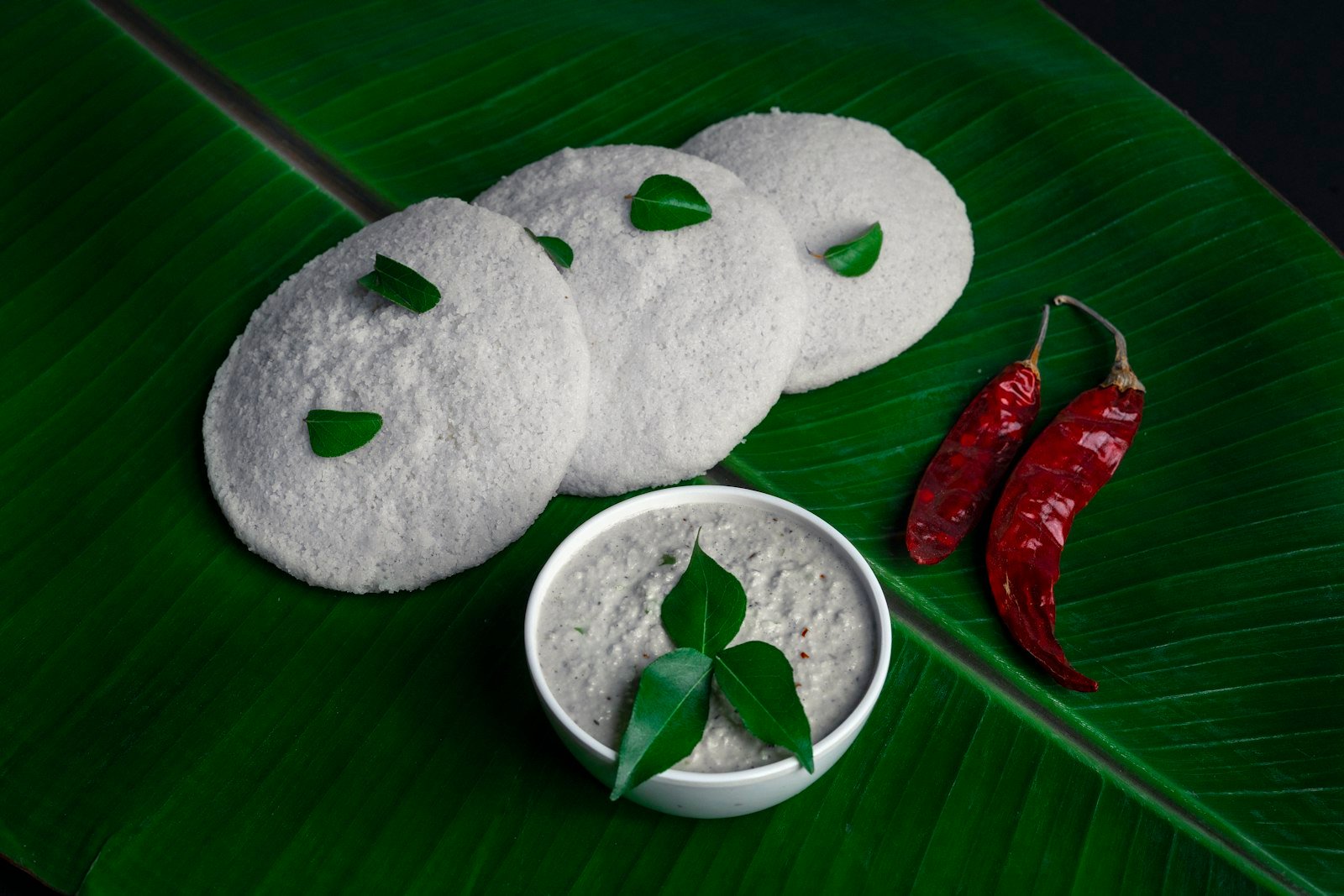
Why do idlis at some homes turn out like soft clouds while others come out flat and dense? Very often, the answer is the batter, and the batter starts with the machine that grinds it. In South Indian homes, the debate between a stone wet grinder and a mixer grinder is an old one.
This guide compares a wet grinder vs mixer grinder for idli, dosa and vada batter, covering texture, fermentation, time, capacity, versatility and care, so you can decide whether a wet grinder is worth adding to your kitchen.
The short answer: wet grinder or mixer grinder?
Choose a wet grinder if you make idli or dosa batter every week for a family of four or more and want the fluffiest, softest results. Stick with a mixer grinder if you make batter only occasionally, cook for one or two people, or need one compact machine that grinds everything.
- Wet grinder: slow stone rollers keep batter cool and airy, ideal for large batches.
- Mixer grinder: fast and versatile; handles masala, chutneys and spice powders as well as small batches of batter.
- Many South Indian homes keep both: the wet grinder for weekly batter and the mixer for everything else.
How does each one grind?
A wet grinder has a drum with a stone base and two or three stone rollers that rotate slowly against it, much like the traditional ammikal or attukal (grinding stone). The slow, steady grinding adds air to the batter and creates very little heat. Tabletop models are the most common in Indian homes today.
A mixer grinder uses sharp steel blades spinning at very high speed inside a jar. It grinds much faster, but the speed and friction warm the batter, and the jar is small, so batter is usually made in several rounds. For a full look at what a mixer grinder can and can’t do, see our mixer grinder vs food processor comparison.
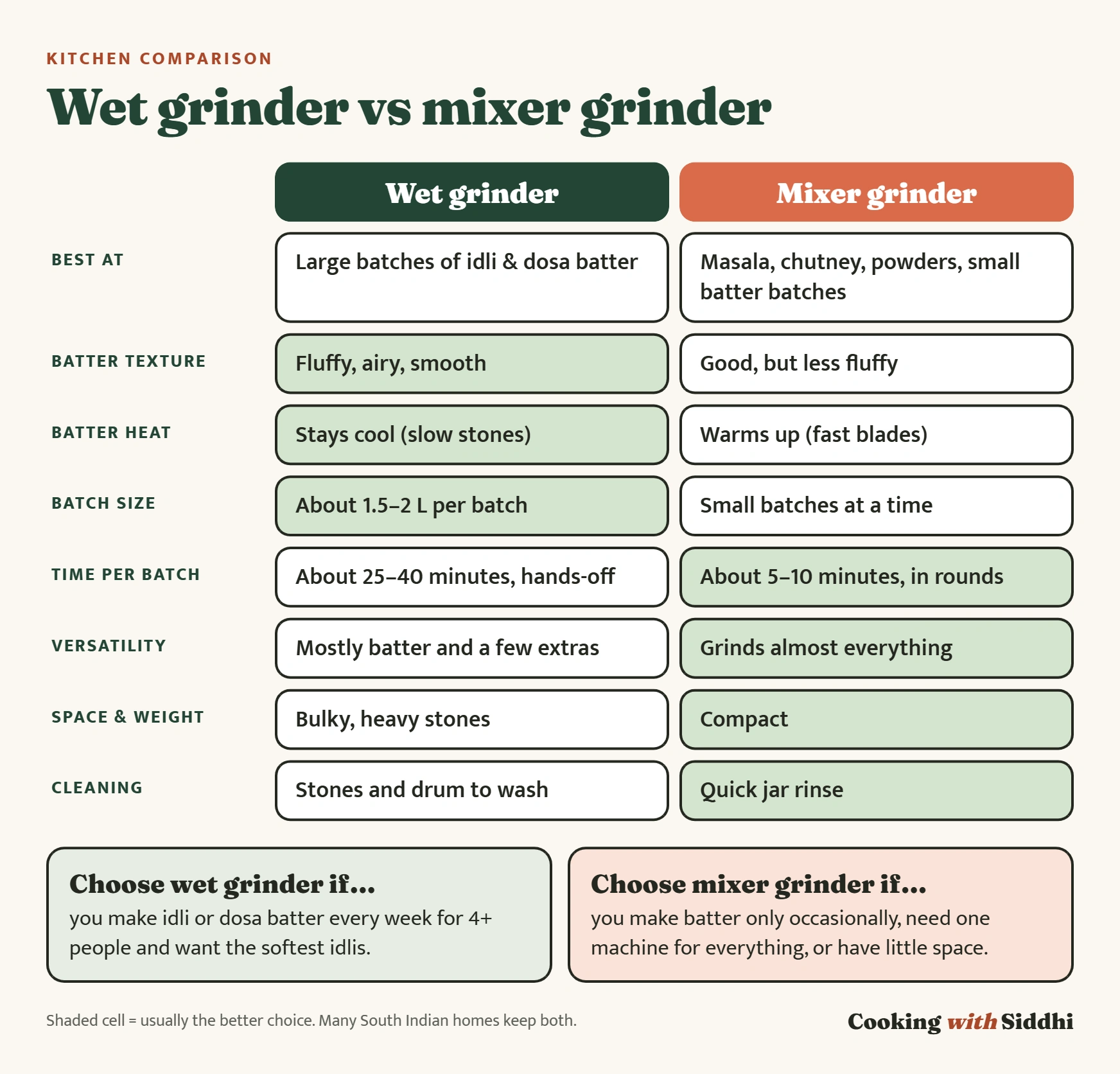
Side-by-side comparison
| Feature | Wet grinder | Mixer grinder |
|---|---|---|
| Grinding method | Slow stone rollers | High-speed steel blades |
| Typical motor | Low-wattage, often around 150 to 200 W | Usually 500 to 1,000 W |
| Batter texture | Smooth, fluffy and airy | Smooth but denser |
| Batter temperature | Stays cool | Can warm up |
| Capacity | About 1.5 to 2 litres per batch for tabletop models | Small batches in a wet jar |
| Time | About 25 to 40 minutes, mostly hands-off | About 5 to 10 minutes per round, with breaks |
| Other uses | Batter; some models add atta kneading or coconut scraping | Masalas, chutneys, powders, smoothies |
| Space | Bulky and heavy | Compact |
| Cleaning | Stones, drum and rollers to wash | Quick rinse of jar and blade |
Why do wet grinders make softer idlis?
- Cooler batter: heat from fast blades can affect the natural fermentation. Stone grinding stays cool, which helps batter ferment evenly.
- More air: the slow, rolling action incorporates air, so urad dal batter becomes light and increases in volume.
- Better urad dal texture: urad dal ground in a wet grinder turns fluffy and almost mousse-like, which gives idlis their soft, spongy texture and vadas their light inside.
That said, a mixer grinder can still make good idlis. Use chilled water while grinding, grind in short bursts, don’t overfill the jar and let the motor rest between rounds.
Which is better for each job?
Idli and dosa batter for a family
Winner: wet grinder. One batch is enough for several meals of idli and dosa for four people, and the batter is consistently fluffier.
Medu vada batter
Winner: wet grinder. Thick, airy urad dal batter for crisp outside, soft inside vadas is where stone grinding really shows.
Occasional batter for one or two people
Winner: mixer grinder. Getting a wet grinder out, running it and cleaning the stones isn’t worth it for a small batch.
Coconut chutney, masala and spice powders
Winner: mixer grinder. It’s much quicker for small amounts of chutney and is the only choice for dry spice powders.
Dhokla and appam batter
Both work. A wet grinder makes larger, airier batches; a mixer grinder is fine for smaller quantities.
Running a wet grinder: a simple routine
- Soak urad dal and rice (or idli rice) separately for 4 to 6 hours.
- Grind urad dal first with a little cold water, adding water gradually, for about 25 to 30 minutes until fluffy and increased in volume.
- Remove it, then grind the soaked rice to a slightly coarse texture.
- Mix both with salt and let the batter ferment overnight in a warm spot.
- Wash the drum, stones and rollers straight after use, before batter dries on them.
Planning a week of South Indian meals? Our 7-day Indian vegetarian meal plan uses one batch of batter for idli at breakfast and dosa at dinner.
What to look for when buying a wet grinder
- Capacity: about 1.5 to 2 litres suits most families of four to six.
- Stone quality: good-quality granite stones grind evenly and last longer.
- Removable drum: makes washing and pouring batter much easier.
- Attachments: atta kneaders and coconut scrapers are useful extras if you’ll actually use them.
- Service network: check that the brand has service support in your city.
Frequently asked questions
Is a wet grinder better than a mixer grinder for idli batter?
Yes, for most families. A wet grinder’s slow stone rollers keep batter cool and add air, which gives softer, fluffier idlis and larger batches. A mixer grinder works for smaller, occasional batches.
Can I make soft idlis with a mixer grinder?
Yes. Use chilled water, grind in short bursts, don’t overfill the jar and let the motor rest between rounds. Grinding urad dal until it’s light and fluffy makes the biggest difference.
How long does a wet grinder take to grind idli batter?
Typically about 25 to 30 minutes for urad dal and a further 15 to 20 minutes for rice in a tabletop wet grinder, depending on the quantity and the model.
Can a wet grinder grind dry spices?
No. Wet grinders are designed for wet grinding. Use a mixer grinder’s dry jar for spice powders.
Is a wet grinder worth buying for a small family?
It’s worth it if you make idli or dosa batter every week. If you make batter only once or twice a month, a good mixer grinder is usually enough.
How do I clean a wet grinder?
Wash the drum, stones and rollers with water right after use, before the batter dries. Use a brush for the grooves and dry all parts before reassembling.
The bottom line
If batter is a weekly ritual in your home, a wet grinder pays you back in softer idlis, crisper dosas and bigger batches. If you make batter now and then, a good mixer grinder with a little technique does the job. The best South Indian kitchens often keep both.