
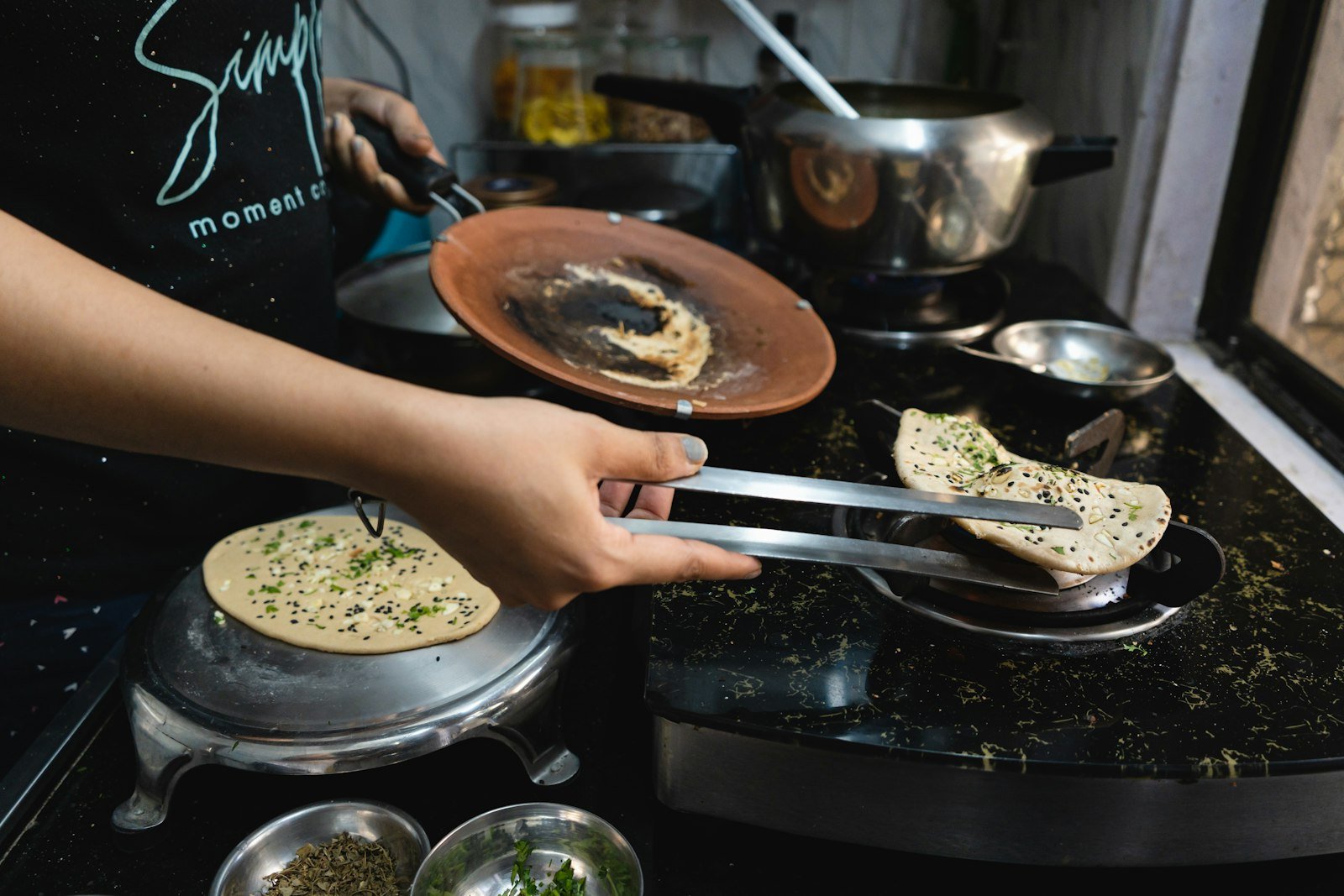
Ask three Indian cooks which tawa makes the best dosa and you’ll probably get three different answers. One swears by her grandmother’s black iron tawa; another loves how easily dosas slide off nonstick. Both are right, for different reasons.
This guide compares a cast iron vs nonstick tawa for dosa, roti, paratha, chilla and uttapam, covering heat, oil, safety, seasoning, induction and everyday care, so you can choose the right one for your kitchen.
The short answer: cast iron or nonstick tawa?
Choose a cast iron tawa if you want crisp, golden dosas, evenly cooked rotis and a tawa that lasts for generations, and you’re happy to season and care for it. Choose a nonstick tawa if you want effortless, low-oil cooking from day one and don’t cook at very high heat.
- Cast iron: holds strong, even heat, works on induction and improves with use, but it’s heavy and can rust if left wet.
- Nonstick: light and beginner-friendly with easy release, but limited to low and medium heat and wears out in a few years.
- Good compromise: a pre-seasoned cast iron tawa, which needs less initial work.
What’s the difference?
A cast iron tawa is a thick, heavy disc of iron. It takes a few minutes to heat up, but then holds that heat steadily, so dosas crisp evenly and rotis puff up nicely. With regular use, a layer of polymerised oil called seasoning builds up on the surface and makes it naturally nonstick.
A nonstick tawa is usually aluminium with a slippery coating on top. It heats quickly, is light to handle and releases food easily with very little oil. The coating is delicate, though: it doesn’t like very high heat, metal spatulas or harsh scrubbing.
There’s also the traditional iron (lohe ka) tawa, thinner than cast iron and common for rotis in North India. It behaves much like cast iron but heats faster and is lighter.
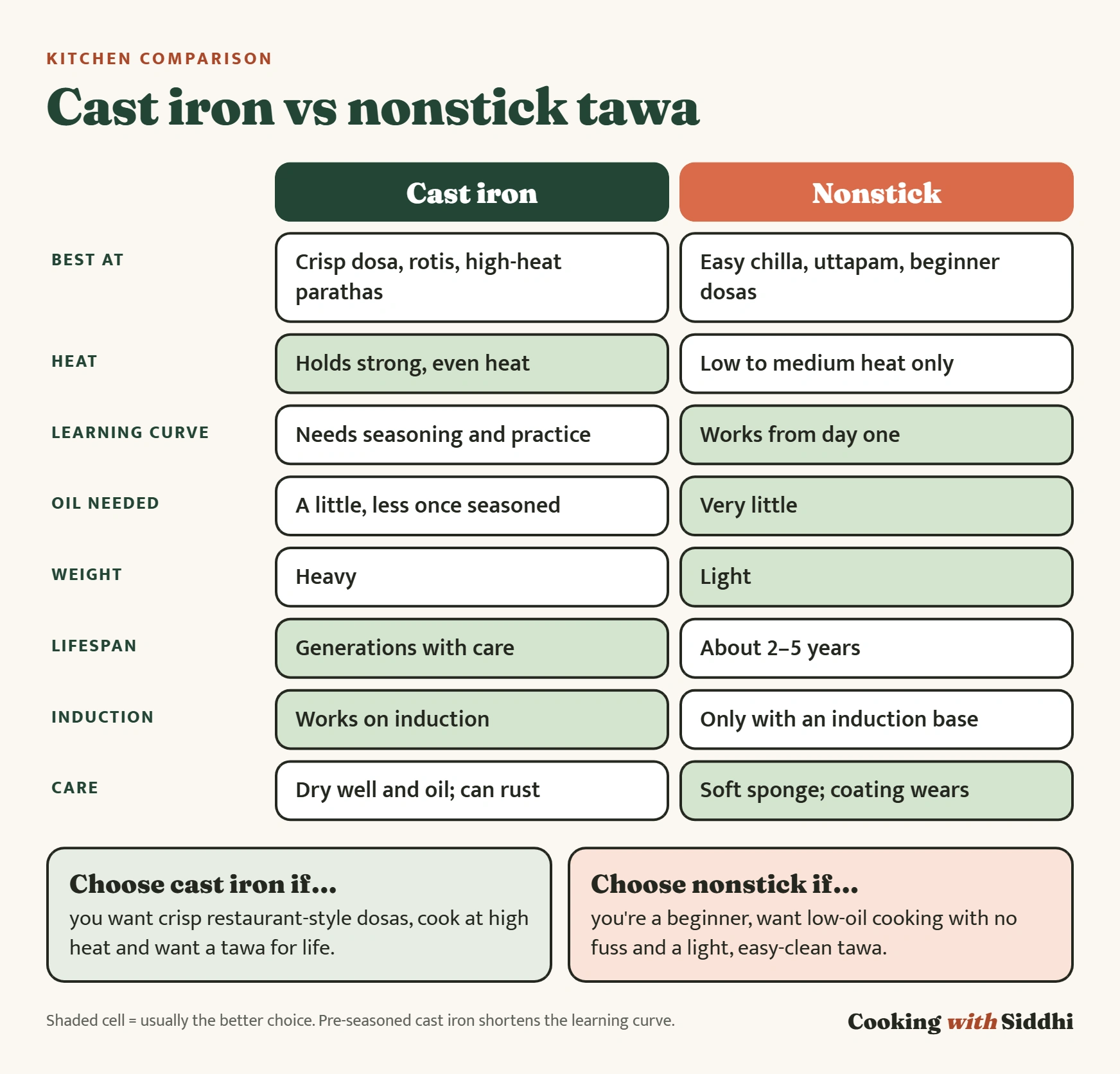
Side-by-side comparison
| Feature | Cast iron tawa | Nonstick tawa |
|---|---|---|
| Heat retention | Excellent; stays hot between dosas | Lower; temperature drops faster |
| Maximum heat | High heat is fine | Low to medium heat recommended |
| Food release | Good once seasoned | Excellent from the start |
| Oil needed | A little; less as seasoning builds | Very little |
| Weight | Heavy | Light |
| Lifespan | Can last generations | Typically about 2 to 5 years |
| Induction | Works | Only with an induction base |
| Rust | Can rust if left wet | Doesn’t rust |
| Utensils | Steel or wood | Wood or silicone only |
Which is better for each dish?
Crisp dosa
Winner: cast iron. Its steady, high heat gives the thin, golden, crisp dosa that restaurants are known for. The trick is to heat the tawa well, sprinkle a few drops of water (they should sizzle away), wipe with a cut onion dipped in oil, then spread the batter.
Soft dosa, uttapam and chilla
Winner: nonstick, for ease. Thicker batters cook beautifully at medium heat on nonstick with almost no oil, and nothing sticks. Cast iron works well too once it’s well seasoned.
Rotis and phulkas
Winner: cast iron or iron tawa. Rotis cook evenly and puff better on iron because the surface stays hot. Nonstick works, but rotis can turn a little dry if cooked too long at low heat.
Parathas
Tie. Cast iron gives crisp, flaky layers at higher heat; nonstick lets you make parathas with less ghee. Choose based on taste and how much fat you want to use.
Paneer, cutlets and tikki
Winner: cast iron for crust, nonstick for low oil. Cast iron gives a better golden crust; nonstick needs less oil and is gentler on soft tikkis.
Is cast iron healthier than nonstick?
Both are fine for everyday cooking when used correctly. A few points to keep in mind:
- Cast iron and iron: studies have found that cooking in iron can add small amounts of iron to food, particularly acidic and moist foods. It’s a nice bonus, but not a replacement for a balanced diet.
- Nonstick: generally considered safe at low and medium heat. Don’t heat it empty on high flame, use wooden or silicone spatulas and replace it when the coating is scratched or peeling.
- Oil use: nonstick needs slightly less oil, while a well-seasoned cast iron tawa needs only a thin film.
For a deeper look at coatings and safety, read our stainless steel vs nonstick cookware comparison.
How to season a cast iron tawa
New, unseasoned cast iron needs a little work before its first dosa. Pre-seasoned tawas can skip straight to step 4.
- Wash the new tawa with warm water and a little soap to remove any factory coating, then dry it completely on the stove.
- Rub a thin layer of oil (groundnut, sesame or any neutral oil) over the whole surface, then wipe off the excess.
- Heat it on medium until it just starts to smoke, then let it cool. Repeat this oiling and heating three or four times.
- Make a few batches of something oily first, like parathas or onion uttapam, before trying thin dosas.
- Over the first few weeks, cook regularly and wipe with a little oil after each use. The surface turns darker and smoother as seasoning builds.
Care tips for each tawa
Cast iron
- Wash with hot water and a brush; a little mild soap occasionally is fine.
- Dry immediately on the stove, then wipe with a few drops of oil while warm.
- If it rusts, scrub the rust off, wash, dry and re-season. It’s almost always fixable.
- Avoid soaking it or leaving it wet in the sink.
Nonstick
- Use wooden or silicone spatulas only.
- Let it cool before washing to avoid warping.
- Clean with a soft sponge and mild soap; no steel wool.
- Replace it when the coating is scratched, flaking or peeling.
Which should you buy?
- You make dosas several times a week: cast iron, ideally a large 12-inch (about 30 cm) one.
- Beginner or student kitchen: a nonstick tawa for easy wins, then add cast iron later.
- Induction cooktop: cast iron works perfectly; check that any nonstick tawa is induction compatible. See our induction vs gas stove guide.
- You want one tawa for life: cast iron, with a little care.
Frequently asked questions
Which tawa is best for dosa, cast iron or nonstick?
For crisp, thin, restaurant-style dosas, a well-seasoned cast iron tawa is best because it holds steady, high heat. For soft dosas, uttapam and chilla with very little oil, a nonstick tawa is easier, especially for beginners.
Why does my dosa stick to my cast iron tawa?
Usually the tawa isn’t hot enough or isn’t seasoned well. Heat it properly, sprinkle water to test (it should sizzle away), wipe with a cut onion dipped in oil, then spread the batter. Regular use builds better seasoning.
Is a cast iron tawa good for rotis?
Yes. Cast iron and traditional iron tawas hold heat well, so rotis cook evenly and puff up nicely.
Can I use a cast iron tawa on induction?
Yes. Cast iron is magnetic, so it works on all induction cooktops. Lift it rather than sliding it to avoid scratching the glass.
How do I remove rust from a cast iron tawa?
Scrub the rust off with steel wool or a coarse scrubber, wash, dry it fully on the stove and re-season with thin layers of oil heated until they just smoke.
How long does a nonstick tawa last?
With careful use on low to medium heat, a nonstick tawa usually lasts about two to five years. Replace it once the coating is scratched or peeling.
The bottom line
A cast iron tawa rewards a little care with crisper dosas, better rotis and a lifetime of use. A nonstick tawa is the easy, low-oil option for beginners and busy weeknights. Many Indian kitchens keep both: iron for dosas and rotis, nonstick for chillas and quick uttapam.