
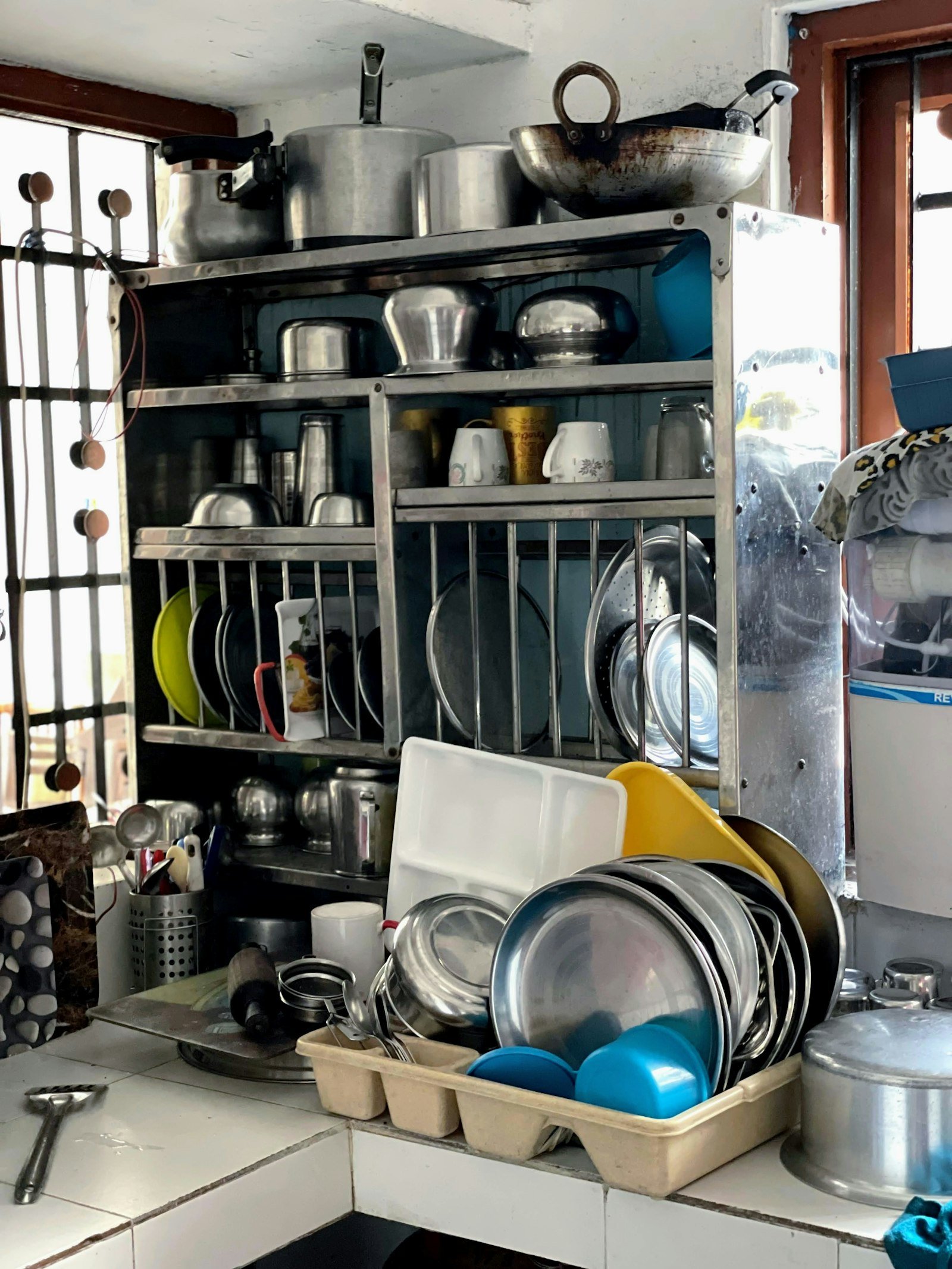
The pressure cooker is the hardest-working vessel in most Indian kitchens. Dal, rice, rajma, chole, khichdi and potatoes all go through it, often more than once a day. So when it’s time to buy a new one, the choice of material matters more than you might think.
This guide compares an aluminium vs stainless steel pressure cooker, and the popular middle option, hard-anodised aluminium, on cooking speed, safety, induction compatibility, durability and care, so you can pick the right cooker for your family.
The short answer: aluminium or stainless steel?
Choose stainless steel if you cook on induction, make tomato or tamarind-based dishes often, or want a cooker that lasts for many years. Choose aluminium if you cook on gas and want a lighter, more affordable cooker that heats quickly. Hard-anodised aluminium is a good middle ground.
- Aluminium: light, fast-heating and affordable, but reactive with acidic foods and not induction-ready unless it has a special base.
- Hard-anodised aluminium: a harder, non-reactive surface that resists stains and scratches.
- Stainless steel: non-reactive, durable, induction-friendly and easy to scrub, but heavier and usually more expensive.
What’s the difference?
Aluminium conducts heat very well, so an aluminium cooker comes to pressure quickly and evenly. It’s light and inexpensive, which is why it has been the classic Indian cooker for decades. Its weakness is that plain aluminium reacts with acidic and salty foods, and it gradually dents, pits and discolours.
Hard-anodised aluminium is aluminium that has been treated to form a thick, hard outer layer. That layer is non-reactive and more resistant to scratches and stains, and it usually has a darker grey or black finish.
Stainless steel doesn’t react with food, doesn’t dent easily and stays shiny for years. Because steel conducts heat less well than aluminium, good steel cookers have a sandwich or tri-ply base with an aluminium or copper core to spread heat evenly and prevent burning.
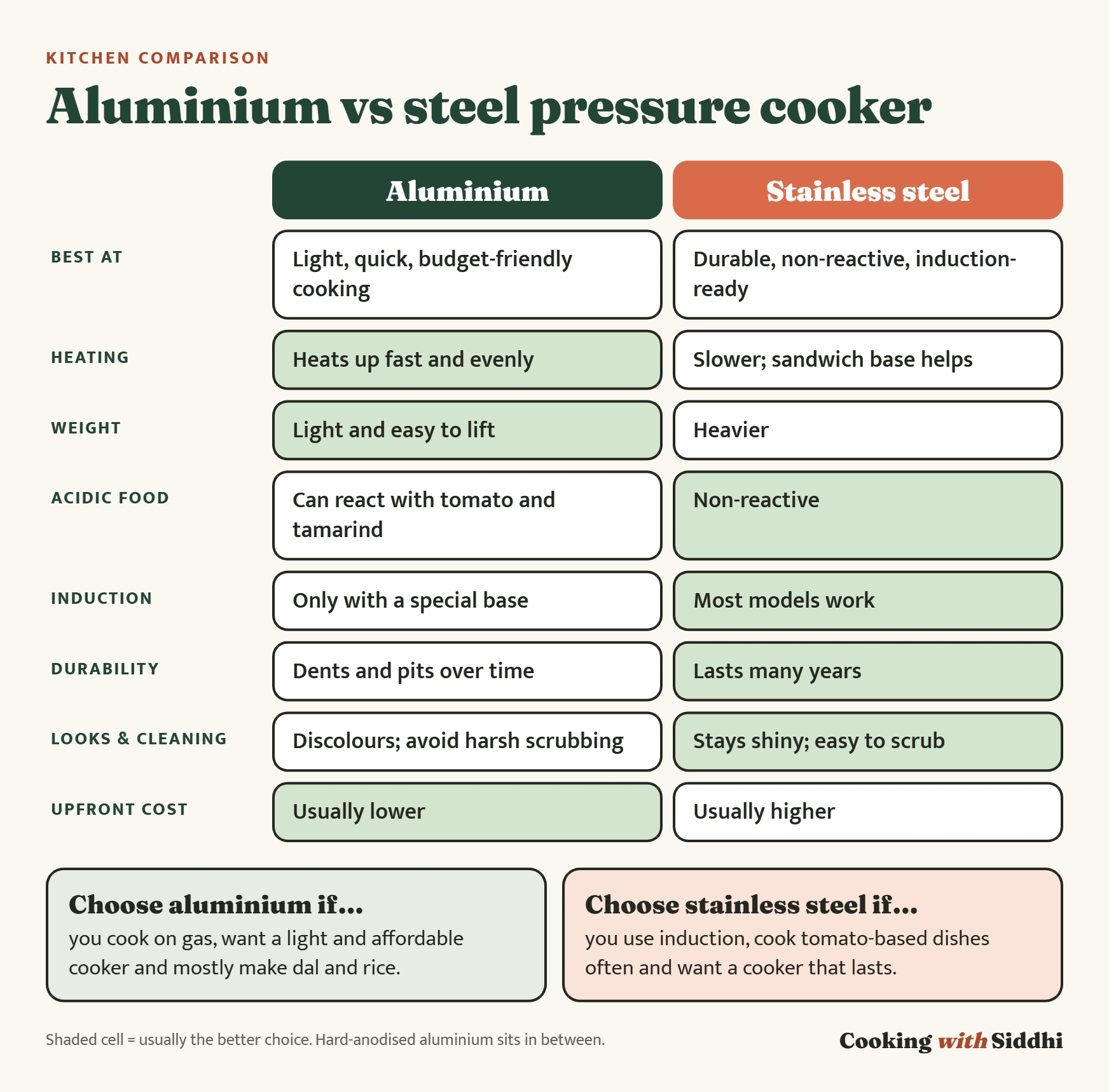
Side-by-side comparison
| Feature | Aluminium | Hard-anodised | Stainless steel |
|---|---|---|---|
| Heating speed | Fast | Fast | Slower; sandwich base helps |
| Weight | Lightest | Light | Heaviest |
| Reaction with acidic food | Can react | Non-reactive surface | Non-reactive |
| Induction compatible | Only with an induction base | Only with an induction base | Most models |
| Durability | Dents and pits over time | Resists scratches and stains | Very durable |
| Cleaning | Avoid harsh scrubbers; discolours | Gentle cleaning | Easy to scrub |
| Upfront cost | Usually lowest | Mid-range | Usually highest |
Which is better for Indian cooking?
Dal, rice and khichdi
Both work well. Aluminium comes to pressure a little faster. A steel cooker with a good sandwich base cooks just as evenly once it’s up to pressure.
Rajma, chole and other tomato-based gravies
Winner: stainless steel or hard-anodised. Tomatoes, tamarind and kokum are acidic. Plain aluminium can discolour and may give a slight metallic taste when acidic gravies are cooked or stored in it. Steel and hard-anodised surfaces don’t react.
Cooking and storing food in the cooker
Winner: stainless steel. It’s fine to leave dal or sabzi in a steel cooker for a while. With plain aluminium, it’s best to transfer acidic or salty food to another container after cooking.
Cooking on induction
Winner: stainless steel. Most steel cookers work on induction. Aluminium and hard-anodised models only work if they have a special induction base. Our induction vs gas stove comparison explains which cookware works on induction.
Is aluminium cookware safe?
Aluminium pressure cookers are widely used in India and are generally considered safe for everyday cooking. A small amount of aluminium can migrate into food, especially acidic or salty food, and more so from old, pitted or heavily scrubbed vessels. To keep it low:
- Don’t store acidic or salty food in a plain aluminium cooker for long.
- Replace aluminium cookers that are badly pitted or worn.
- Choose hard-anodised aluminium or stainless steel if you cook tomato and tamarind dishes often, or simply prefer peace of mind.
Pressure cooker safety: what really matters
Whatever the material, safety comes down to a few checks:
- Look for the ISI mark. Pressure cookers sold in India must meet the BIS standard (IS 2347). Avoid unbranded cookers without certification.
- Replace the gasket when it becomes loose, hard or cracked, usually every year or two with regular use.
- Check the safety valve and vent tube before each use and keep them clean and unblocked.
- Don’t overfill. Fill no more than about two-thirds, or half for foods that froth, like dal and rice.
- Never force the lid open. Let the pressure release naturally or follow the manufacturer’s quick-release method.
What size pressure cooker do you need?
| Household | Suggested size |
|---|---|
| 1 to 2 people | 2 to 3 litres |
| 3 to 4 people | 3 to 5 litres |
| 5 to 6 people | 5 to 7 litres |
| Large families and batch cooking | 7 litres or more, plus a small one for quick jobs |
Care tips that make your cooker last longer
- Aluminium: wash with mild soap and a soft scrubber; avoid steel wool, which wears the surface. Dry well before storing.
- Hard-anodised: avoid metal scourers and dishwashers unless the brand says they’re safe.
- Stainless steel: soak burnt bits, then scrub; a little baking soda paste removes stains.
- All cookers: remove the gasket after use, wash and dry it, and store the lid upside down or loosely placed so the gasket isn’t squashed.
Which should you buy?
- Gas stove, budget-conscious, mostly dal and rice: an ISI-marked aluminium cooker.
- Gas stove, cook lots of rajma, chole and sambar: hard-anodised aluminium or stainless steel.
- Induction stove: stainless steel with a sandwich base, or an aluminium cooker clearly labelled induction compatible.
- Want one cooker for 10+ years: a good stainless steel cooker.
Frequently asked questions
Which is better, an aluminium or stainless steel pressure cooker?
Stainless steel is better for durability, induction cooking and acidic dishes like rajma and sambar. Aluminium is lighter, heats faster and usually costs less, which suits gas stoves and everyday dal and rice.
Is it safe to cook in an aluminium pressure cooker?
Aluminium pressure cookers are widely used and generally considered safe for everyday cooking. To limit aluminium migration, avoid storing acidic or salty food in them and replace cookers that are pitted or badly worn.
Do stainless steel pressure cookers take longer to cook?
They can take slightly longer to reach pressure because steel conducts heat less well than aluminium. A cooker with a sandwich or tri-ply base heats much more evenly and reduces the difference.
What is a hard-anodised pressure cooker?
It’s an aluminium cooker treated to form a hard, non-reactive outer layer. It resists scratches and stains better than plain aluminium and doesn’t react with acidic foods.
Can I use an aluminium pressure cooker on induction?
Only if it has an induction-compatible base. Plain aluminium doesn’t work on induction because it isn’t magnetic.
How often should I change the pressure cooker gasket?
Replace it when it becomes loose, hard, cracked or starts leaking steam, typically every one to two years with daily use.
The bottom line
For a light, fast and affordable cooker on a gas stove, aluminium still does the job. For induction, acidic dishes and a cooker that lasts for many years, stainless steel is the better investment, and hard-anodised aluminium is a smart in-between choice. Whatever you buy, choose an ISI-marked cooker and keep the gasket and valve in good shape.